
I became familiar with Dracula at a very young age. My first introduction was the 1931 film starring Bela Lugosi. I must have been ten or eleven years old.
There is little doubt that Bram Stoker’s Dracula was a tremendous influence on Ravenloft and Curse of Strahd. It has also clearly influenced my own work expanding the campaign through Legends of Barovia.
Creature Feature
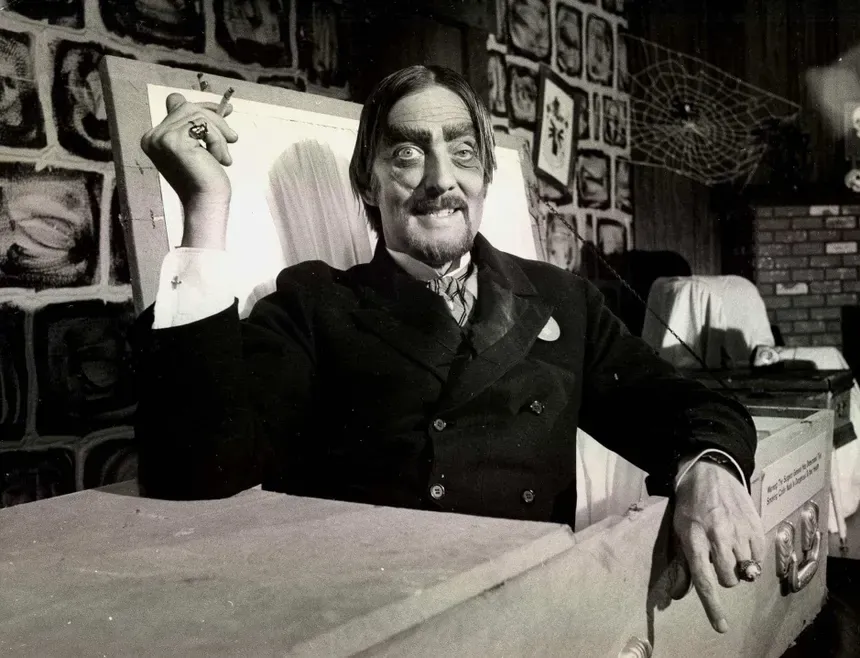
When I was a kid, Sunday afternoons meant Creature Feature, hosted by Dr. Paul Bearer. Each week, he presented another old horror movie. I was always excited to discover what was showing next and secretly hoping it would be another Dracula film.
Over the years, I watched countless vampire movies, including many of the Hammer films: Horror of Dracula, The Brides of Dracula, Taste the Blood of Dracula, and so many others. I remember seeing at least five Hammer Dracula films, probably more.
Christopher Lee, Bela Lugosi, Peter Cushing, haunted castles, frightened villagers, fog, crypts, graveyards, and women wandering through darkened corridors in their nightgowns, this was Dracula I had grown up with.
I started playing D&D during the summer of 1981. I was twelve years old and had just finished seventh grade, back when we still called it junior high rather than middle school. And let’s be honest: junior high sounds much cooler.
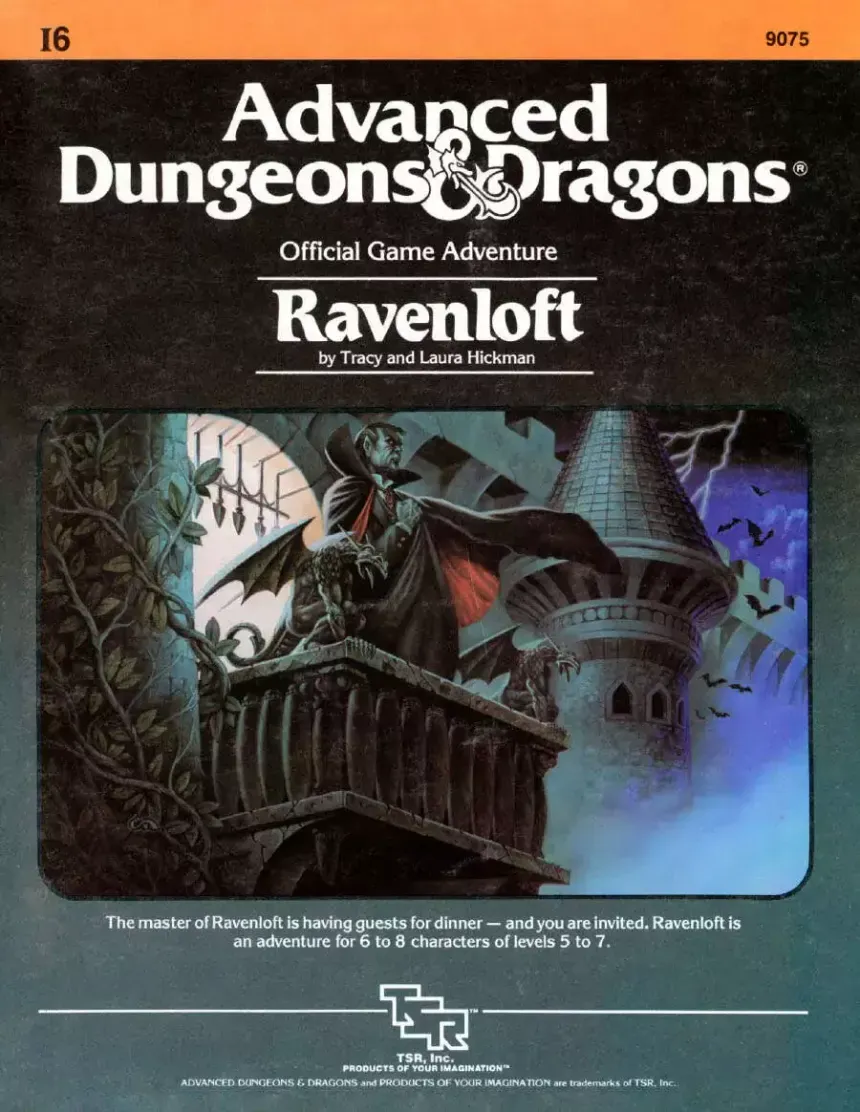
By my fifteenth birthday in 1983, TSR had released I6: Ravenloft. After years of watching Creature Feature, including more Dracula and vampire movies than I could count and I was more than ready for Castle Ravenloft.
My friends and I planned to play it over Christmas break. One of my friends owned the adventure, and all I knew about it was the cover. That was enough.
I remember waiting and waiting for Christmas break to arrive so we could finally dive in.
I was so excited about the adventure that I told my grandfather. He was fascinated by this strange roleplaying game called Dungeons & Dragons, especially the fact that it used dice. He called dice “probability rocks,” which I thought was funny.
One time, he had me build a pyramid out of a bunch of d6s to show me the probabilities of rolling 2d6. It was a simple way to visually show me what a probability curve looked like, and I never forgot that lesson.
My Grandfather, Pyram King, Was My Google
In the 1980s, my grandfather was my Google and Wikipedia.
He was a true polymath: an engineer by trade, an inventor from a family of inventors who had worked with Henry Ford, and a man deeply knowledgeable about Latin, philosophy, history, mathematics, and physics. He regularly corresponded by letter with the writer and anthropologist Loren Eiseley and also exchanged letters with physicist Richard Feynman.
Whenever I wanted to understand something, I asked him.
He listened attentively as I told him about Ravenloft, how much it sounded like Dracula, and how excited I was to play it.
Then he asked a simple question:
“Have you read Dracula?”
No, I told him, but I had seen the movies, even the Bela Lugosi one.
He smiled and said that I had not truly experienced Gothic horror until I had read the novel.
However, I wasn’t interested. At fifteen, I thought I had already endured enough “classics” in school. My mother was also an English teacher and had fed me a few more classics than I cared to read. I would not realize how grateful I was to her until decades later.
At fifteen, however, I wanted to read cool things, not some dusty old Victorian novel. I was enjoying Michael Moorcock’s Elric stories and wanted fantasy, swords, sorcery, and adventure.
“Trust me, I think you will find it far more interesting than you imagine.”
He knew exactly why.
I had no idea what he meant.
The Library
I ventured over to the public library, our version of Google, Wikipedia, Project Gutenberg, and almost everything else we now take for granted on our phones. It was the 80s, no internet, no cell phones.
It was also where we played D&D after school during the school year.
The library was always an adventure. There was nearly always something strange or unexpected waiting to be discovered on one of its shelves.
I found books such as David Macaulay’s Castle, with its intricate drawings showing how a medieval fortress was designed and constructed, as well as his equally fascinating Cathedral. Still two of my favorite books to explore.
I also discovered Gnomes by Huygen, which described the homes, habits, customs, and even anatomy of gnomes as though they were entirely real.
Then there was Brian Froud's Faeries, filled with beautiful and sometimes unsettling images of the creatures that felt like a secret world.
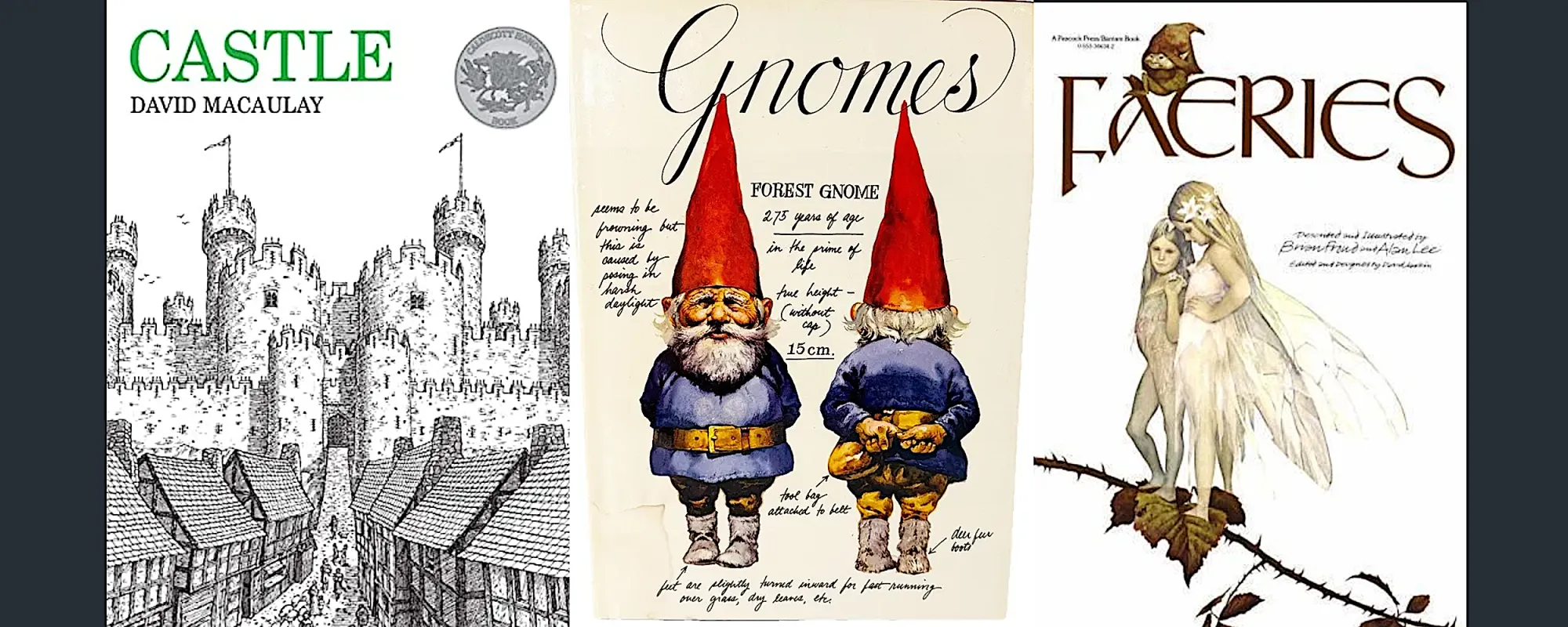
Those books felt like forbidden field guides to worlds that might actually exist.
For a young D&D player, they were irresistible.
I still recommend picking them up. You can usually find copies on AbeBooks.
Then I found it, a plain-looking book, nothing particularly special about the cover except the words Dracula by Bram Stoker.
But when I opened it, I found something I wasn’t expecting.
Reading Dracula
Naturally, my grandfather was right. He knew before I did that I was going to love it.
Dracula was cool precisely because it was nothing like what I expected. It wasn’t some dry, conventional old novel.
It was an epistolary novel, the first I had ever encountered.
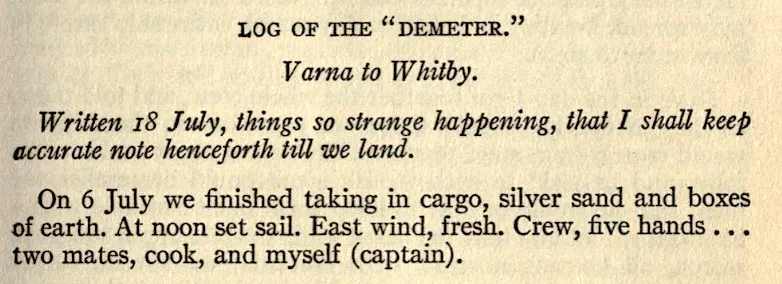
The story was assembled from diaries, letters, telegrams, newspaper clippings, medical notes, and a ship’s log. Reading it felt like investigating a mystery. There were dates to follow, clues to notice, and different accounts that slowly came together to reveal something terrible.
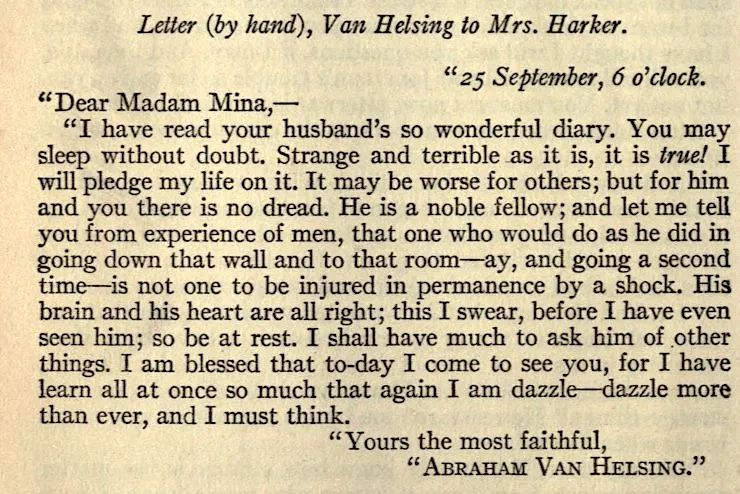
Think of a novel made entirely out of player handouts. I mean, how cool is that?
For a fifteen-year-old D&D player preparing to venture into Ravenloft, this was cooler than cool.
I immediately told my friends about it, and we all read Dracula before playing Ravenloft that winter. I even made some fake diary entries and a fake ship’s log of my own, just for fun.
Needless to say, the adventure ended in a total party kill.
But it was a glorious TPK, and it remains one of the greatest adventures I have ever played. Afterward, I stared for hours at that isometric map of Castle Ravenloft, wondering about all the rooms we had never made it to.
It is worth remembering that during the 1980s, I don’t think any of my characters ever made it beyond seventh level. Most of them died around fourth or fifth. Hit points recovered slowly, danger was everywhere, and survival was never guaranteed.
It was simply the way we played.
Dracula in real time.
Since then, I have read Dracula four times, most recently finishing it again last week.
While wandering down an internet rabbit hole afterward, I discovered something wonderful, something I immediately knew I had to share: Dracula told in real time.
Naturally, I signed up.
It is free.
A genius named Matt Kirkland created Dracula Daily, a project that uses the dated structure of Bram Stoker’s novel to deliver each section on the day it occurs within the story.
I mean, how cool is that?
Because Dracula is composed of dated letters, diaries, newspaper reports, telegrams, and ship logs, the entire novel follows a calendar. The story runs from May 3 through November 7. Dracula Daily sends each portion by email on the corresponding date.
Some days bring lengthy diary entries. Other days offer only a few sentences. Sometimes several days pass in silence.
Instead of reading the novel over a weekend, you experience it gradually across more than six months.
You wait while Jonathan Harker waits.
You wonder what has happened during the stretches when no letters arrive.
You receive reports from Whitby as events unfold. You follow the voyage of the Demeter through its increasingly ominous ship’s log. You watch the characters slowly gather evidence, compare accounts, and begin to understand the horror facing them.
It transforms the novel into something resembling a nineteenth-century investigation unfolding inside your inbox.
The project begins again every May. Once you subscribe, entries arrive whenever something happens within the novel’s timeline.
Don't worry, if you jump in now, it restarts every year.

You can subscribe to Dracula Daily.
Perhaps the best way to read it is to let Dracula come to you, one letter, diary entry, telegram, and bloodstained ship’s log at a time.
Dracula as a Player Handout
There is another unusually cool version of Dracula worth checking out.
Those who know my work know that I love player handouts. I have created nearly a hundred of them, and Legends of Barovia is loaded with letters, journals, maps, notices, documents, and other physical clues for the players to discover. Dracula, as an epistolary novel, was a huge inspiration.
Now imagine someone treating the entirety of Dracula like a collection of player handouts.
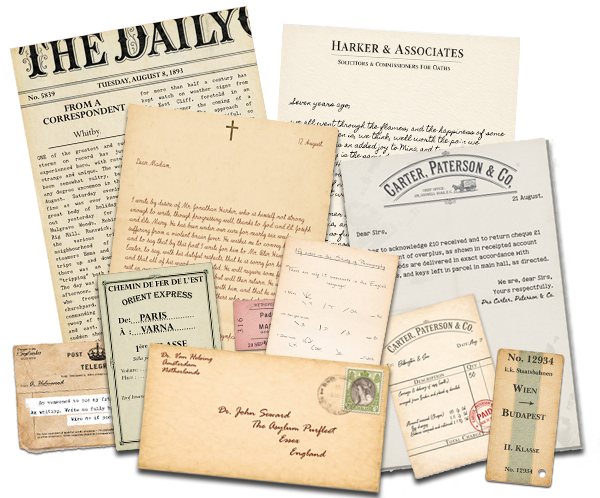
I recently discovered Dracula: An Archival-Inspired Edition of the 1897 Text.
This 651-page edition presents Stoker’s novel as an archival collection, taking full advantage of the letters, diaries, newspaper clippings, journals, telegrams, and other documents that make up the story.
If you enjoy player handouts, tactile props, historical documents, or simply the atmosphere that a well-made physical handout can bring to a game, you will probably love this. It feels almost like holding the evidence from the story in your hands rather than simply reading a novel.
You can find Dracula: An Archival-Inspired Edition of the 1897 Text on Amazon.
More than forty years after my grandfather first encouraged me to read Dracula, I am discovering another way to experience it.
He was right then, and his advice remains true today:
You may have seen Dracula, but you have not truly experienced Gothic horror until you have read Dracula.