
What it is, how to run it,
and optional rules
When I first created Legends of Barovia in 2021, I included a set of Gothic Horror rules inspired by the 2014 Dungeon Master’s Guide. Over time, through play, feedback, and refinement, it became clear those rules could be sharper, leaner, and more closely aligned with what Barovia is meant to evoke.
Curse of Strahd is not a high-fantasy power fantasy. It is a campaign of dread, survival, isolation, and slow corruption. Victories are costly. Rest is uncertain. Fear is a constant companion.
With the release of the 2024 rules and five years of community feedback, these Gothic Horror rules have been revised into a more concise and elegant form. They are designed to reinforce tension without overwhelming the table and can be used with any edition of D&D. As always, they are entirely optional.
Before diving into mechanics, however, it’s important to understand Gothic Horror itself, its tone, framing, and atmosphere. This should be established at the beginning of the adventure and reinforced at Session Zero, so players understand what kind of story they are stepping into.
What Is Gothic Horror?
Gothic horror traces its roots to Horace Walpole’s The Castle of Otranto (1764). At its core, it is a struggle between humanity and overwhelming evil, set against bleak, oppressive landscapes. These stories often blend horror with tragedy, obsession, and doomed romance.
Classic examples include:
- Dracula by Bram Stoker
- Frankenstein by Mary Shelley
- “The Raven” by Edgar Allan Poe
- The poetry of Charles Baudelaire (Les Fleurs du mal)
Barovia and the Ravenloft setting more broadly, is D&D’s expression of Gothic Horror. Characters are not destined heroes reshaping the world. They are ordinary adventurers achieving something extraordinary simply by surviving and confronting their fears.
In Gothic Horror, the odds are stacked against the characters. Evil is ancient, pervasive, and often unknowable. The world itself seems hostile. Fear, dread, despair, and even madness are natural consequences of enduring such a place.
Decay is everywhere: dead trees, crumbling structures, corpses, and forgotten roads. Villagers bar their doors at night. Hope is scarce, and despair is common.
Gothic Atmosphere
Barovia is foreboding, strange, and unsafe. The characters are outsiders in a land that will frequently outmatch them. Victory is possible, but it is rarely clean, and never guaranteed.
Despite the darkness, Gothic Horror is not nihilistic. There is light in Barovia. The characters’ purpose is to restore fragments of beauty, dignity, and hope to a land that has been suffocating under darkness for nearly four centuries.
That contrast, between horror and fragile hope, is what gives Gothic Horror its power.

Running Gothic Horror at the Table
Combat Encounters
Do not focus on perfectly balanced encounters. Gothic Horror thrives on uncertainty.
Some encounters should be trivial. Others should be terrifying. Retreat must be a real and valid option. Make this clear to your players early. Not every fight is meant to be won, and pressing forward can carry lasting consequences, including serious injury or death.
Make sure to telegraph danger, players need to be able to make an informed decision.
Social Encounters
Gothic Horror leans heavily into roleplay.
NPCs are not simple quest dispensers, they are survivors, victims, conspirators, and broken souls.
- Villagers are fearful and distrustful, especially when Strahd is involved
- Information is often partial, whispered, or wrapped in superstition
- Some NPCs carry vital secrets, shared through songs, poems, or folktales
- Repeating rumors and lore in different forms reinforces important truths
Timers and Pressure
Use time pressure to force difficult decisions. When the clock runs out, something terrible happens.
Examples:
- A relic must be returned before a certain date, or vampire spawn are unleashed
- A cult ritual completes if not stopped in time
- A druidic ceremony animates a wicker monstrosity
- A captive drowns if not rescued quickly
Setbacks
Setbacks make victories meaningful. Losses should matter.
Stolen gear, imprisonment, injury, betrayal, or outright defeat all reinforce the harsh reality of Barovia.
Lore and Mystery
Lore is essential. It provides context, clues, and emotional weight.
Books, journals, letters, and songs all serve as windows into the past. Libraries and abandoned homes should reward curious players with information that helps them survive.
Everything in Gothic Horror is connected. Encourage investigation and curiosity, but avoid false clues and meaningless misdirection. The “Three Clue Rule” (Justin Alexander) is an excellent guiding principle.
No-Win Scenarios
Present hard choices where every option carries a cost. Sacrifice is part of the genre.
Sometimes there is no “right” answer, only the least terrible one.
False Reprieve
Moments of safety should never feel permanent. A peaceful night at a tavern might end in possession, betrayal, or violence. Relief makes the next horror sharper.
Humor
Dark humor provides relief and contrast.
- The village drunk wandering the roads at night
- A revenant knight who doesn’t realize he’s dead
- Running jokes about terrible food or foul ale
Used sparingly, humor makes the horror land harder.
The Roller Coaster of Terror
Gothic Horror thrives on pacing. Think in three escalating stages:
Unsettling
Subtle signs that something is wrong. Foreshadowing and unease.
A statue weeps blood, but the stain vanishes when touched.
Dread
The environment turns hostile. Tension spikes.
A cold wind extinguishes the torches. The door slams shut and locks behind you.
Terror
An immediate, personal threat.
You feel a drip on your face. Looking up, you meet the eyes of the vampire clinging to the ceiling, just before it drops.
Most of the time, the game should move between Unsettling and Dread. Terror should strike when players least expect it.
Romantic Tragedy
At its heart, Gothic Horror and Curse of Strahd in particular, is a romantic tragedy. Strahd’s obsession with Tatyana is only the most obvious example. Barovia is filled with doomed love, broken promises, and unfulfilled longing.
Lean into these stories. They humanize the horror.
Optional Gothic Horror Rules
The following rules reinforce the themes above. Use any or all of them as desired.
Fear
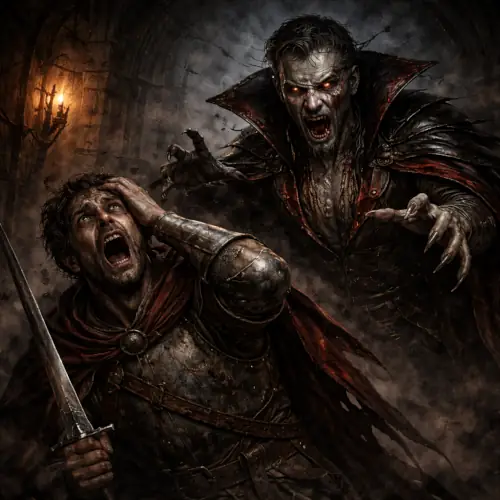
When a character confronts a threat they clearly have little or no hope of overcoming, the DM may call for a Fear check.
The character must succeed on a Wisdom saving throw or become frightened for 1 minute.
Common triggers include:
- A monster whose maximum hit points exceed the party’s combined hit points
- A creature capable of killing a character with a single blow or spell
Fear Save DC:
DC = 10 + the creature’s Challenge Rating
Despair
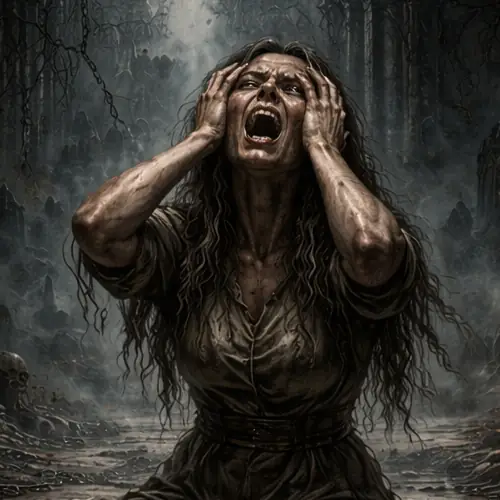
A suffocating melancholy clings to Barovia. Those who linger risk being worn down by hopelessness.
A creature must make a Despair check after:
- A rest interrupted in an unsafe location
- Awakening after the death of a party member
- Suffering a lingering injury
- Witnessing long-term or indefinite madness
- Experiencing a major setback
On a failed DC 10 Wisdom saving throw, the creature suffers a Despair effect. A failed save replaces any existing Despair effect.
A creature should not make more than one Despair check per day.
Despair Effects (1d6)
- 1–3 Apathy: Disadvantage on death saves and initiative checks
Flaw: “I don’t believe I can make a difference.” - 4–5 Dread: Disadvantage on all saving throws
Flaw: “This place is going to kill me.” - 6 Insanity: Disadvantage on Int, Wis, and Cha checks and saves
Flaw: “I can’t tell what’s real anymore.”
Recovering from Despair
- After a short or long rest, attempt a DC 15 Wisdom save
- Calm emotions, lesser restoration, and greater restoration remove Despair
Nightmares
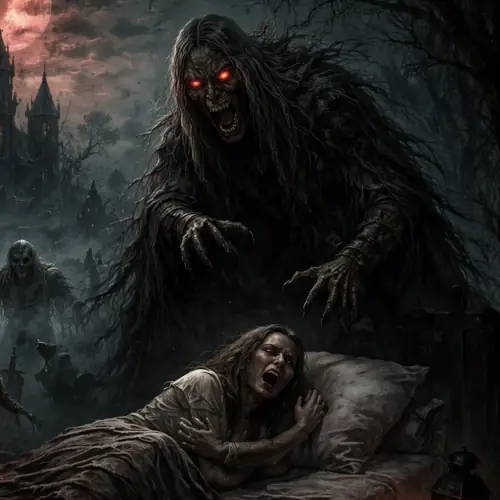
If a creature begins a long rest with less than half its hit points or any level of exhaustion, it risks nightmares.
On a failed DC 10 Wisdom save, the creature suffers one Nightmare effect until its next long rest.
Nightmare Effects (1d6)
- Horrid Dreams – Disadvantage on death saves
- Fear of Failing – Initiative is set to 1
- Defeated by a Monster – No critical successes on a natural 20
- Fear of the Dark – Disadvantage on Fear checks
- Horrific Visions – Disadvantage on Wisdom checks and saves
- Crushing Despair – Roll on the Despair table
Resting in Barovia
Short Rest
A creature may roll only one Hit Die, adding Constitution as normal.
Long Rest
A long rest lasts 8 hours (6 hours of sleep).
Unsecured Location
- Roll remaining Hit Dice to heal
- Regain 1 Hit Die
- Prepare spells
Secured Location
- Regain all hit points
- Regain half spent Hit Dice
- Prepare spells
Exhaustion:
After 24 hours without a long rest, gain 1 level of exhaustion every 12 hours.
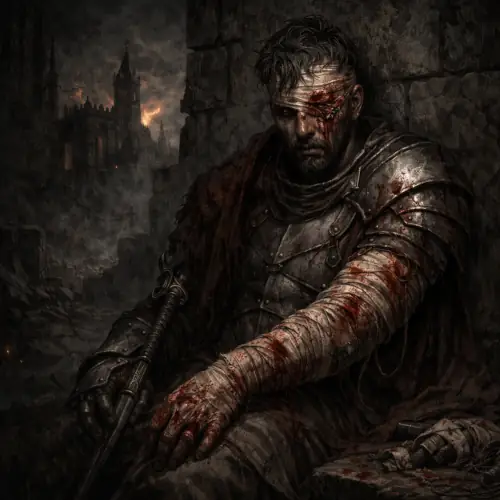
Lingering Injuries
When a creature:
- Fails a death save by 5 or more
- Suffers a critical hit
- Is reduced to 0 hit points but survives
It must succeed on a DC 10 Constitution save or suffer a Lingering Injury.
Magical healing restores hit points but does not remove injuries.
Lingering Injuries (d20)
1 Lose an Eye
2 Lose an Arm or Hand
3 Lose a Foot or Leg
4 Limp
5–7 Internal Injury (Disadvantage on Connotational Saves)
8–10 Broken Ribs (Disadvantage on STR / DEX Saves)
11–13 Horrible Scar
14–16 Festering Wound
17–20 Minor Scar
Healing often requires powerful NPCs, opening paths to favors, quests, secrets, and deeper horror.
These rules exist to slow the pace, sharpen tension, and remind players of a simple truth:
Barovia is not meant to be conquered.
It is meant to be endured.