
Confessions of a Module Addict
From LEGO to Erector Sets to Lincoln Logs
My six-year journey down the Foundry VTT rabbit hole.
I started using Foundry VTT back in 2020, when it was still on version 6. That was over six years ago, and I quickly discovered something about Foundry.
It is the LEGO of virtual tabletops.
With thousands of possibilities and an ever-growing collection of third-party modules, you can build just about anything you want. Want animated dice? There's a module for that. A new combat tracker? There's a module for that. Want to automatically assign something to a character sheet, change how tokens behave, or automate some obscure rule that comes up once every six sessions?
There's probably a module for that, too. And like any good LEGO enthusiast, I couldn't help myself.
I fell down the rabbit hole.
Confessions of a Module Addict
Back in the early days, there were perhaps 20, 30, or 50 modules worth exploring. Over the years, that number grew into the hundreds, and today, with AI development and vibe coding, the pace of module creation seems to be accelerating.
It has become nearly impossible to keep track of everything.
I've run one-shots and campaigns with 100, 120, and even 160 third-party modules installed and running... Yes. One hundred and sixty!
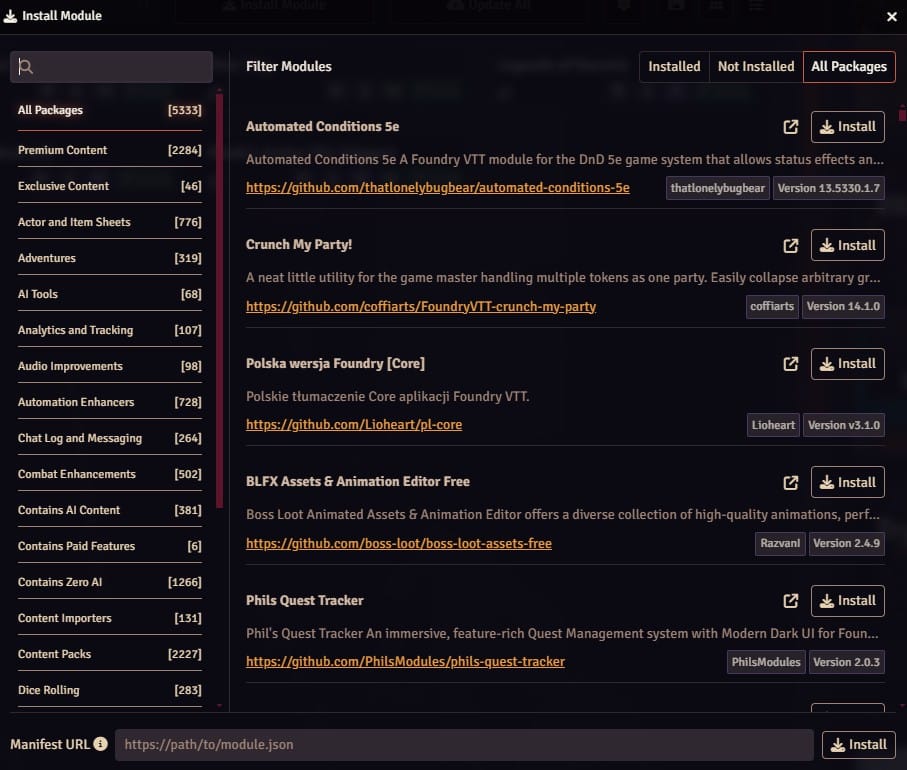
Dice trays, combat trackers, initiative tools, character sheet enhancements, token utilities, automation systems, special effects, GM tools, and dozens of other little conveniences.
Some were incredibly useful. Others solved problems I didn't even know I had. And some probably created more problems than they solved.
Over the years, Foundry itself has evolved considerably. Game systems such as D&D 5e and Pathfinder 2e have become increasingly sophisticated, incorporating features that once required third-party modules.
Yet the appetite for modules remains or perhaps I should call it what it really is.
An addiction.
And I am an addict.
The Three Types of Foundry Addicts
After six years of using Foundry, I've come to believe there are three types of Foundry module addicts.
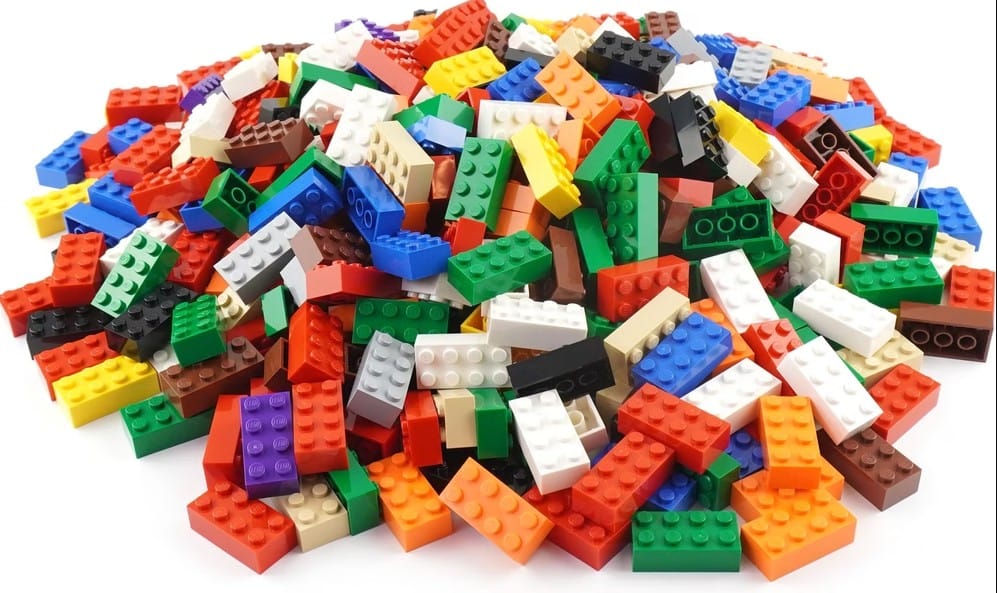
1. The LEGO Addict
The LEGO addict loves the plug-and-play experience.
Find a module, install it, configure a few settings, and voilà! A new feature appears in Foundry. These are the people running 50, 75, or even 100+ third-party modules.
They love experimenting with new features, discovering clever tools, and customizing their games. Every new module is another colorful brick to add to their creation, and when something doesn't work? Well, there's probably another module that fixes it.
I know this person very well.
I was this person.
2. The Erector Set Addict
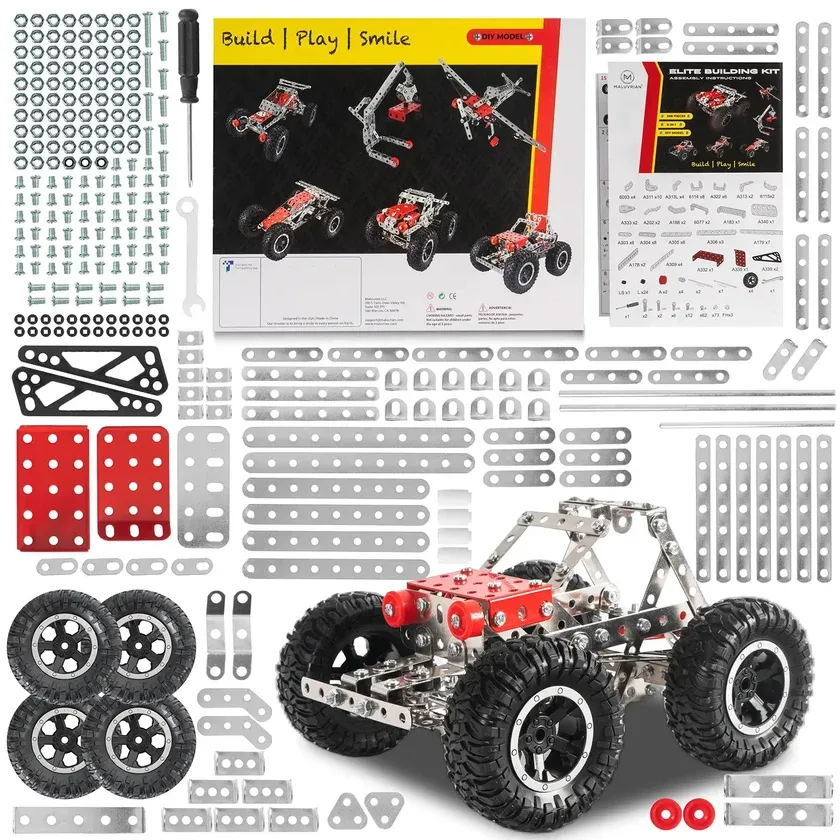
Then there's the Erector Set addict.
These are the engineers, the tinkerers, the people who aren't satisfied with simply installing a module. They want to know how it works.
They dig into GitHub, experiment with JavaScript, create macros, modify settings, and occasionally find themselves debugging something at two in the morning. They have probably hosted Foundry on a Raspberry Pi, configured their own cloud server, or built an elaborate system of interconnected modules that only they fully understand.
For them, Foundry isn't simply a virtual tabletop. It's a workshop!
There are nuts to tighten, gears to adjust, and endless opportunities to improve the machinery.
And I understand this addiction, too.
Because I became this person.
3. The Lincoln Logs Addict
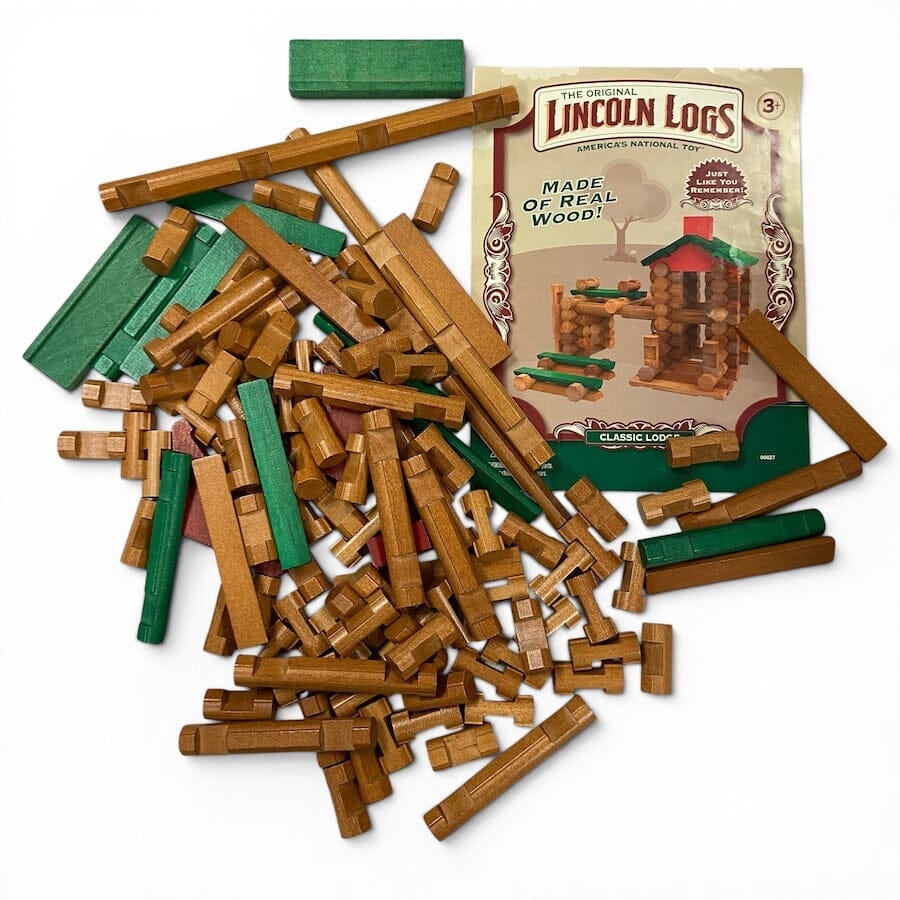
And finally, there's the Lincoln Logs addict.
Simple wooden pieces. A few basic shapes. Not a hundred different moving parts. Just enough to build something wonderful.
This is where I've ended up.
A dice tray, Dice So Nice, perhaps a handful of quality-of-life modules, and that's about it.
Fewer than ten modules.
No elaborate automation. No complicated dependencies. No endless tweaking. Just a tabletop, some dice, a few maps, tokens, and friends telling stories.
After years of building increasingly elaborate Foundry setups, I've discovered something rather surprising.
I don't need most of it. And perhaps even more surprising?
I'm enjoying Foundry more than ever.
My Potato Computer Philosophy
There's another reason I've gradually embraced simplicity.
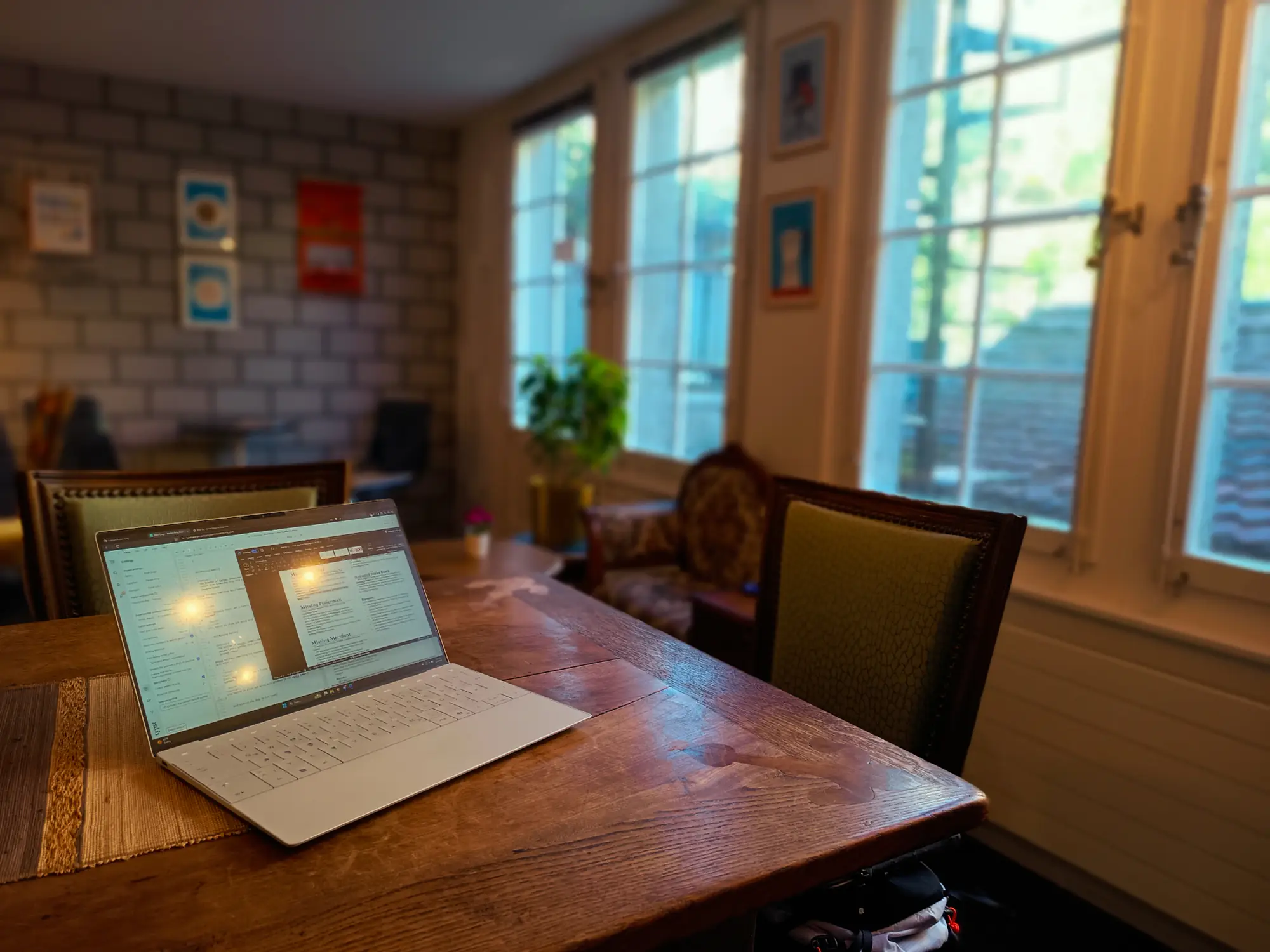
When I started using Foundry in 2020, I was running it on a Dell XPS 13 laptop. Which I still use today, for most my work. Not exactly a high-end gaming rig.
I didn't have a powerful GPU or unlimited bandwidth. Of course, that didn't stop me from trying to push Foundry to its limits.
But it taught me something important. Not everyone playing tabletop RPGs owns a gaming computer. Not everyone has a fast internet connection. Some people are playing on older laptops, traveling, or connecting from places with limited bandwidth.
When you are the GM, it's easy to forget that your players may not have the same hardware or connection that you do.
As I began creating adventures for Foundry, this became one of my guiding principles.
Keep it lightweight. Keep it fast. Keep it accessible.
I started optimizing my maps, converting them to WebP, and experimenting with compression and sharpening techniques.
Maps that might originally have been 10–20 MB could often be reduced to around 1 MB while maintaining good visual quality. I also made a deliberate decision to lean heavily into Foundry's native features rather than building adventures dependent on dozens of third-party modules.
My philosophy became simple: Build adventures that can run on a potato.
Because a beautiful map, a good story, and an engaging encounter should not require a $3,000 gaming computer to enjoy.
Rediscovering Foundry's Core
Recently, while playtesting my own tabletop RPG, Iron & Myth, I have taken this philosophy even further.
I've started running it using Foundry's Simple Worldbuilding system, essentially a system-agnostic framework that gives me basic actors and tokens without imposing a complicated ruleset.
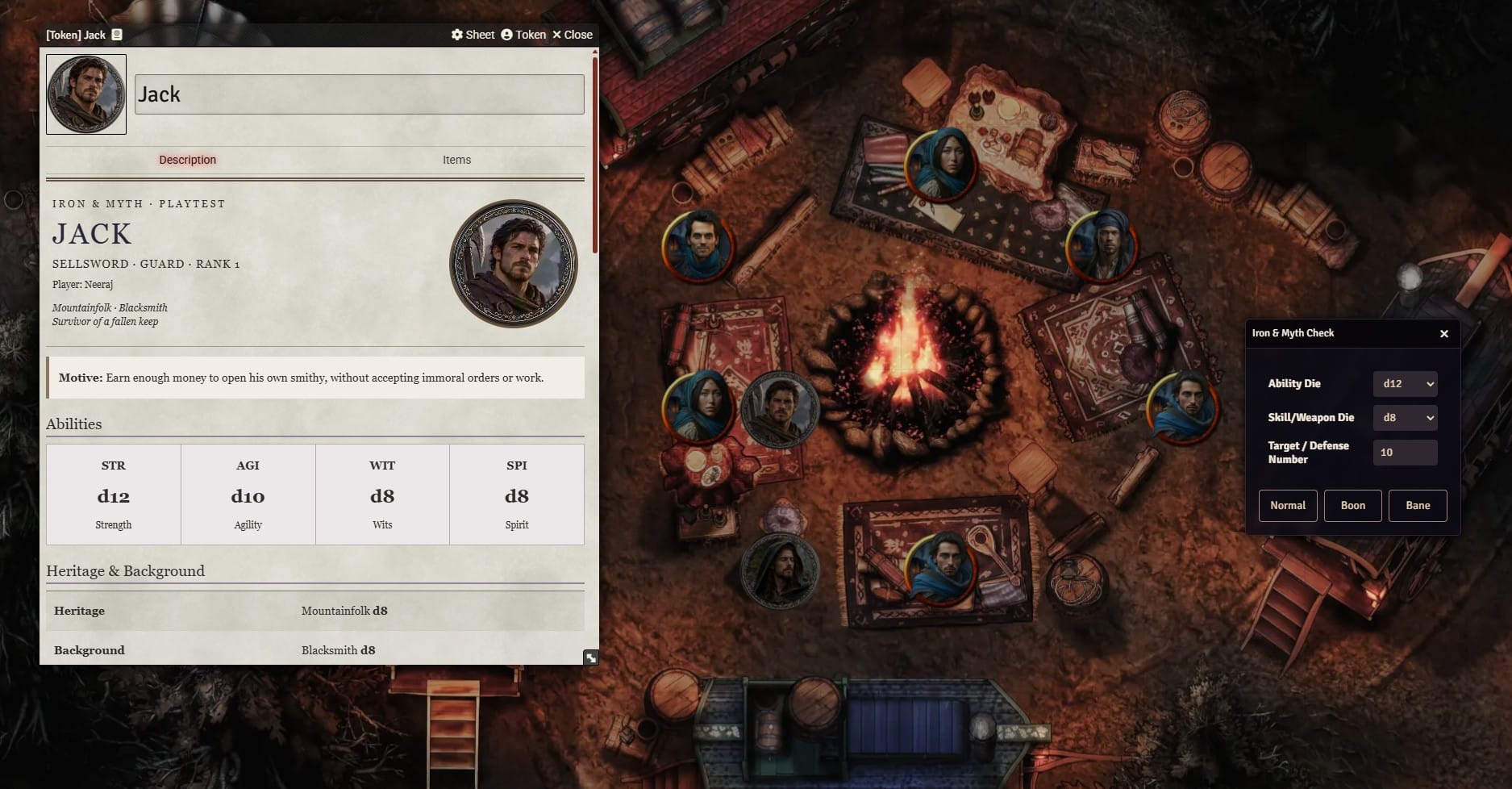
I can use a PDF character sheet, create something with HTML, or build a few simple macros to handle dice rolls and that's about it.
I have now run several playtests this way, and something interesting has happened. I have rediscovered just how powerful Foundry's core features really are.
I don't need an elaborate character sheet framework. I don't need a system that automatically tracks every condition, modifier, or action.
For my style of play, I often just need somewhere to roll dice, move tokens, display maps, and share information. The rest happens around the table.
It's been liberating.
Does Foundry Have to Be Complicated?
One criticism I've heard over the years is that Foundry is too complicated.
That it's designed for people who enjoy tinkering with software rather than simply playing tabletop RPGs. And to be fair, I understand why some people feel that way.
With so many modules, settings, systems, and possibilities, Foundry can be overwhelming.
But here's what I have learned. Foundry doesn't have to be complicated.
You can make it complicated. You can build an elaborate automation engine with hundreds of features, special effects, and custom scripts. Or you can install a game system, drop a map onto the canvas, place a few tokens, roll some dice, and start playing.
You don't need 100 modules. You don't even need ten. And depending on how you play, you might not need any.
That's something I wish I had understood six years ago.
Full Circle
I have gone through all three stages of Foundry addiction.
I started as a LEGO addict, eagerly installing every interesting module I could find.
Then I became an Erector Set addict, exploring the machinery behind the scenes, tweaking settings, experimenting with macros, and trying to build the perfect virtual tabletop.
And now?
I'm a Lincoln Logs addict.
Less is more.
That's not to say I've abandoned third-party modules (Monk's Active Tiles — wink, wink, nudge, nudge, say no more). There are some wonderful developers in the Foundry community creating remarkable tools, and I still enjoy discovering what people are building.
Perhaps I'll eventually find a few more modules that make my lightweight approach even better.
But I have stopped feeling the need to install everything simply because I can and that's the beauty of Foundry. It really is a hobbyist's platform.
Whether you want an elaborate, fully automated virtual tabletop or simply a digital space to roll dice with friends, Foundry can accommodate you.
There's room for the LEGO builders, the Erector Set engineers, and the Lincoln Logs traditionalists.
And after six years of falling down the rabbit hole, I think I have finally learned something.
The best Foundry setup isn't the one with the most modules. It's the one that gets out of the way and lets you play.
Now, if you will excuse me, I just saw an interesting new module on GitHub.
I promise I am only going to look.
Just one more module...