
Game Masters spend a lot of time thinking about encounters. Usually, the first thing that comes to mind is creatures, monsters that fit the scene, realm, and narrative context.
But not every encounter needs to be a monster.
Some of the most memorable encounters are environmental, the world itself becoming the threat.
Environmental encounters shift focus from combat resolution to survival, problem solving, and player creativity. They reinforce tone, make travel meaningful, and remind players that the setting is not just backdrop, it is active, dangerous, and alive.
Designing Environmental Encounters
When creating an environmental encounter, there are two core questions to answer.
1. What is the Risk?
Risk does not always mean death (though it can). Consider:
- Time pressure (arrive before ritual completes, reach shelter before nightfall)
- Navigation risk (getting lost, separated, or stranded)
- Resource loss (gear, mounts, supplies)
- Injury or exhaustion
- Catastrophic failure (death, burial, falling, exposure)
Good environmental encounters often layer risks. Survival might mean choosing what you are willing to lose.
2. How Do You Make It Engaging and Fun?
Environmental encounters succeed when they:
- Reward creative thinking
- Allow multiple solutions
- Create tension that escalates over time
- Stay fast to run at the table
- Feel dangerous without becoming bookkeeping
Elegance matters. If it takes longer to run than a combat, most groups will disengage.
Case Study: Tsolenka Pass
In the Legends of Barovia series, I faced this exact design challenge.
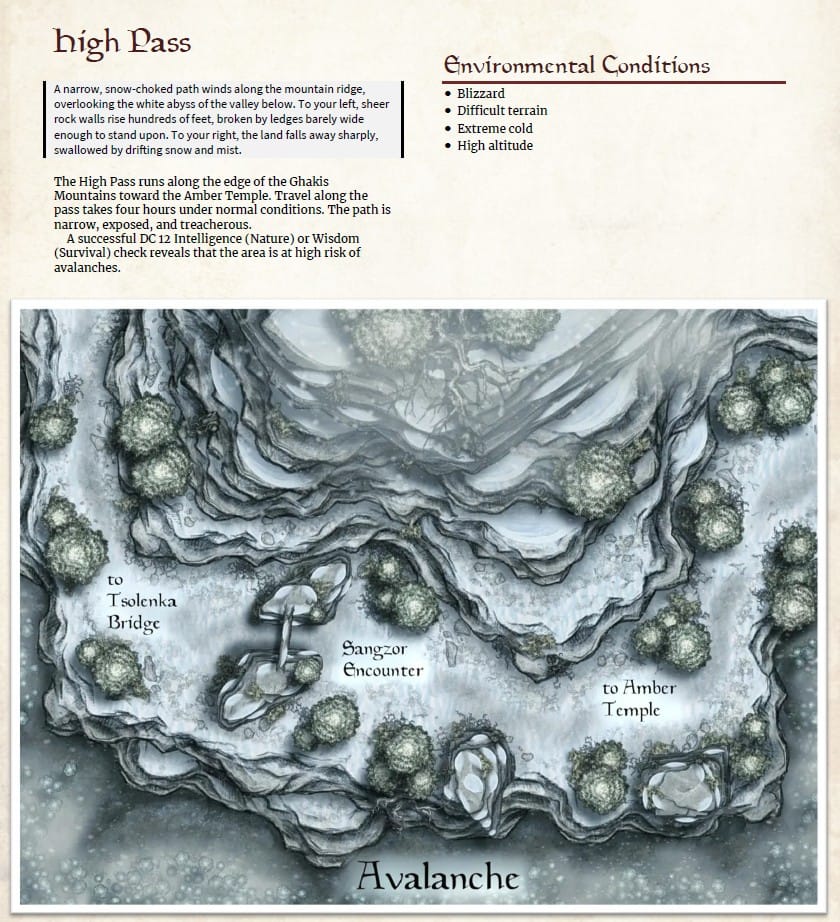
Tsolenka Pass is a high, frozen mountain crossing, brutally cold, blizzards, and isolated. There are creatures and natural hazards (ice, wind, exposure), but I wanted something else:
Something cinematic.
Something terrifying.
Something mechanically simple to run.
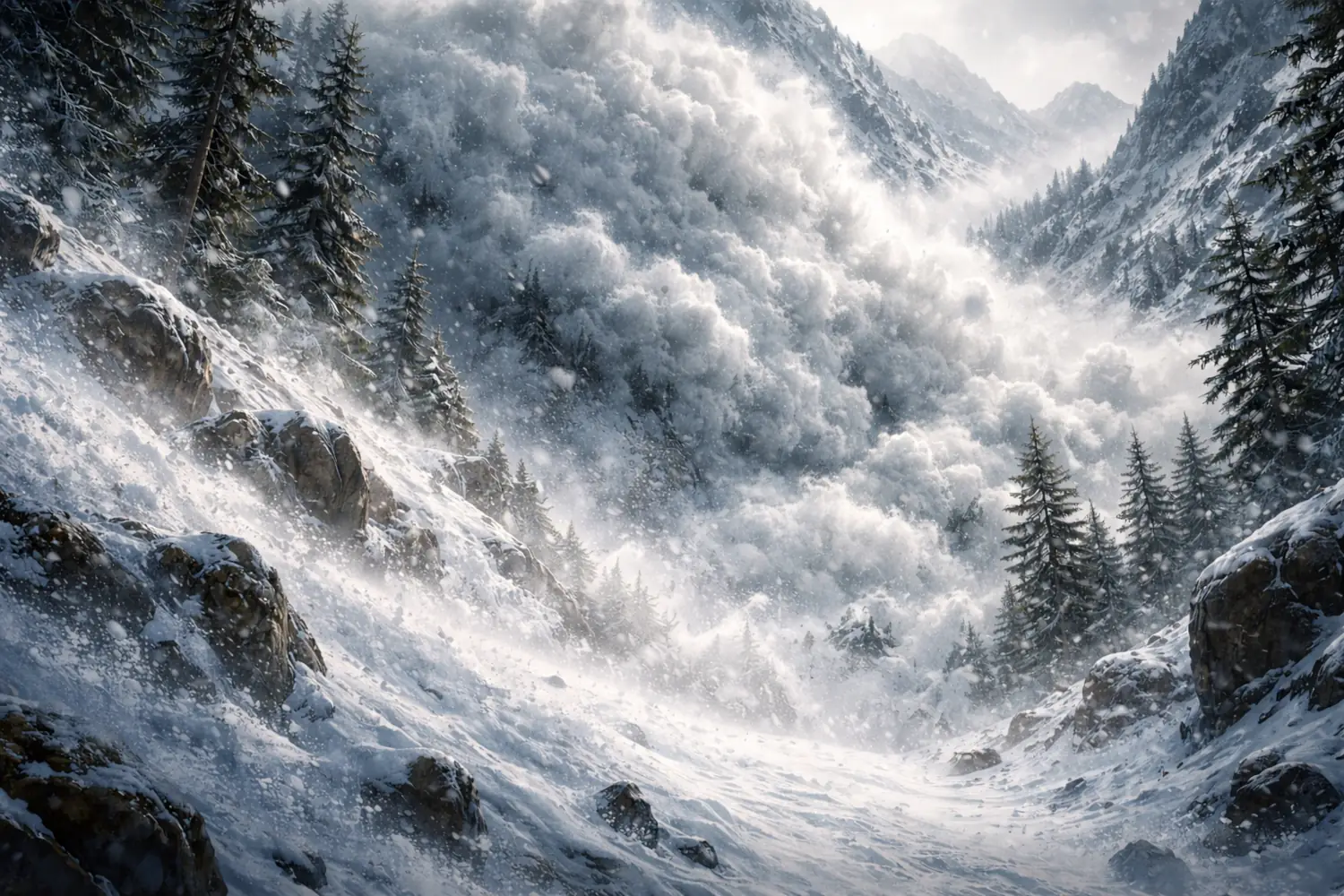
The perfect answer was an avalanche.
Avalanche
Why an Avalanche Works
An avalanche is ideal because it is:
- Fast
- Unpredictable
- Escalating
- Impersonal (the mountain does not hate you, it just moves)
Triggers can include:
- Loud noise
- Thunder or lightning magic
- Explosions or fire magic
- Climbing or unstable footing
- Combat or chaos in unstable terrain
Running It Theater of the Mind
This encounter is designed for Theater of the Mind play.
Instead of tracking exact distances, we track threat progression.
This keeps tension high and rules overhead low.
Avalanche Encounter
A deep, thunderous crack echoes through the mountains. The slope above you collapses. An entire mountainside begins to move. A wall of snow roars toward you.
Avalanche Threat Range
Instead of measuring distance, track the avalanche using Threat Range:
- Far — A distant roar. There is time to react.
- Closing — Snow is visibly gaining.
- On You — The wall of snow is almost upon you.
- Overtaken — You are inside the avalanche.
The avalanche begins at Far and advances each round.
If it reaches Overtaken, characters are caught.
Avalanche Duration
The avalanche lasts 1d4 + 3 rounds (4–7 rounds total).
If the party survives without being Overtaken when the final round ends, the avalanche thunders past and dissipates downslope.
Avalanche Round Sequence
Each character’s turn follows this structure:
1. Avalanche Condition Check
At the start of their turn, roll 1d12 on the Avalanche Condition Table and apply the result immediately.
2. Desperate Action
The player describes how they try to survive.
Movement is narrative but resolved mechanically.
- Run Downhill
- Make a DEX (Acrobatics) check. DC depends on Threat Range:
- Far: DC 12
- Closing: DC 14
- On You: DC 16
- Overtaken: DC 18
- Success: You stay ahead this round.
- Failure: Avalanche advances one Threat Range.
- Make a DEX (Acrobatics) check. DC depends on Threat Range:
- Find Cover or Move Laterally
- Avalanche advances one Threat Range.
- Gain advantage on checks and saves next turn.
- Aid an Ally
- Avalanche advances one Threat Range.
- One ally gains advantage on their next avalanche check or save.
- Creative Action
- Resolve with an appropriate check or save. Typically the avalanche advances, unless the action clearly reduces danger.
- Reward strong ideas with: Advantage, lower DC, Preventing threat advancement
Avalanche Condition Table (1d12)
| d12 | Condition |
|---|---|
| 1 | Buried Drift — Avalanche advances one Threat Range |
| 2 | Hidden Ice — DEX save DC 12 or lose action |
| 3 | Falling Debris — Take 1d8 bludgeoning |
| 4 | Blinding Snow — Disadvantage on next action |
| 5 | Sheer Drop — DEX save DC 12 or next action disadvantage |
| 6 | Safe Route — All PCs gain advantage next roll |
| 7 | Clear Path — No effect |
| 8 | Moment of Control — Advantage next roll |
| 9 | Hard Snowpack — Ignore avalanche advance this round |
| 10 | Natural Shelter — Reduce DCs by 2 until next round |
| 11 | Expert Instinct — One extra action (no extra movement) |
| 12 | Perfect Line — Reroll one failed roll this turn |
Overtaken
If a creature ends a round Overtaken:
- Takes 4d8 bludgeoning damage
- Becomes Restrained
- 25% chance to lose one carried item
Each turn while buried:
- STR Save DC 15 to break free
- On failure: take 1d8 crushing damage
Rescue Attempts
A non-Overtaken creature may attempt rescue:
Action: STR (Athletics) DC 15
Success: Buried creature gains advantage next escape check
If avalanche is still active:
Each rescuer causes avalanche to advance one Threat Range against them.
Rescue is heroic and dangerous.
Aftermath: The Cost of Survival
Survival should change the story.
Consider:
- Exhaustion
- Lost or damaged gear
- Separated party members
- Buried NPCs or mounts
- Lost supplies
- Psychological impact
Because mountains do not forget who they almost claimed.
System Considerations
While the above mechanics are written with D&D-style play in mind, the structure is intentionally flexible and can be adapted to almost any TTRPG system.
The core idea is not the exact numbers, it is the framework:
- Escalating threat
- Limited time window
- Player-driven survival choices
- Narrative movement instead of grid measurement
- Consequences that extend beyond HP loss
Most systems can translate this easily by adjusting:
- Check types (skill rolls, saving throws, dice pools, etc.)
- Difficulty numbers
- Damage values
- Conditions or status effects
The goal is tension, not precision math.
Beyond Avalanches: Building Other Environmental Encounters
An avalanche is only one example of environmental design. The same structure can be used across many environments.
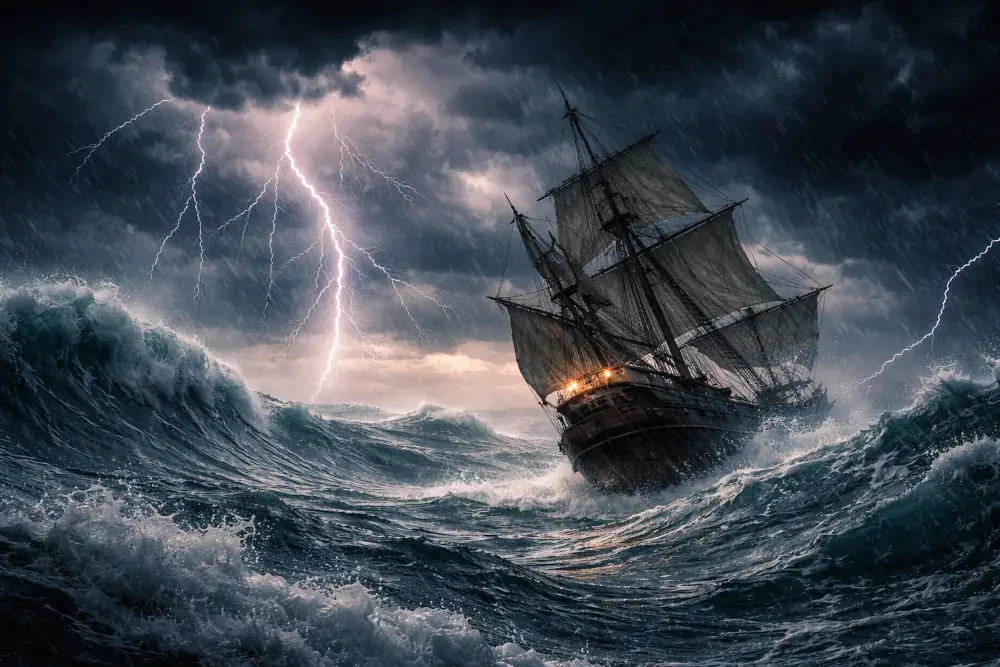
Storm at Sea
Risks may include:
- Shipwreck
- Rogue waves
- Crew swept overboard
- Mast or sail damage
- Taking on water
Threat Range might represent distance from safety or severity of storm conditions.
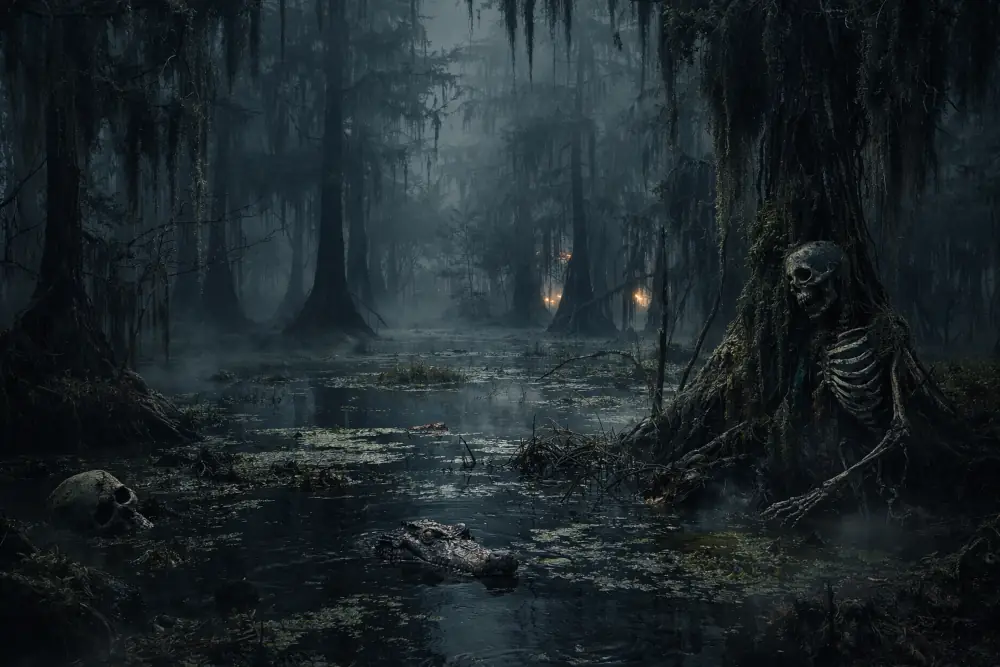
Swamps and Marshlands
Risks may include:
- Becoming lost
- Quicksand or deep mud
- Poisonous flora
- Falling trees
- Disease or parasites
Threat progression might represent worsening terrain or loss of safe footing.
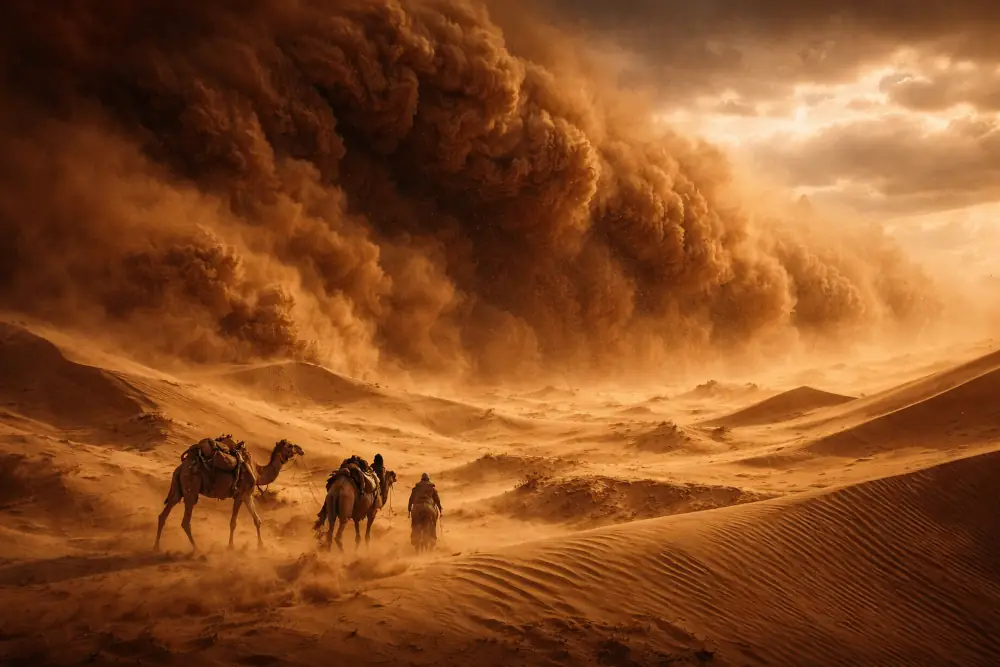
Desert Travel
Risks may include:
- Sandstorms
- Heat exhaustion
- Buried ruins or sink dunes
- Loss of direction
- Water loss
Threat might represent exposure level or distance from shelter.
Environmental encounters work best when they feel inevitable once triggered the players are not fighting the environment, they are surviving it.
Final Thoughts
Environmental encounters remind players:
The world is not balanced.
The world is not fair.
The world is alive.
And sometimes the most memorable session is the one where no sword is drawn and everyone barely makes it out alive.
You can find the Avalanche encounter in the FREE PDF Guide: Tsolenka Pass
You can find other guides here: Legends of Barovia Free PDF Guides