
Years of tinkering with the rules, simplifying mechanics, and making the game my own.
I recently attended a gathering of Game Masters where the topic of discussion was house rules, particularly for Dungeons & Dragons and D&D-adjacent games.
It got me thinking about some of the rules I've adopted, modified, or created over the years, and why I continue to use them.
I started playing D&D in the early 1980s with Tom Moldvay's Basic D&D (B/X). Since then, I've played through several editions, incorporating my own house rules along the way. Some have remained at my table for decades, while others have evolved as my approach to running games has changed.
I don't always use all of them. Depending on the game, the players, and the adventure, I might use a handful or several together.
My goal has always been simple: reduce the burden on the Game Master while giving players simpler mechanics, meaningful choices, and more opportunities to interact with the fictional world.
I want to spend less time consulting rules, tracking numbers, and doing arithmetic, and more time focusing on the adventure, the characters, and the consequences of their decisions.
These aren't necessarily original ideas, nor am I suggesting they're better than the rules as written. They're simply approaches I've developed or adopted over more than forty years of playing tabletop roleplaying games.
You might find some useful, modify others to suit your table, or disregard them entirely.
That's the beauty of house rules.
I've compiled all my house rules into a single PDF, which is free and available for download at the end of this post.
The Rules Are Only Suggestions
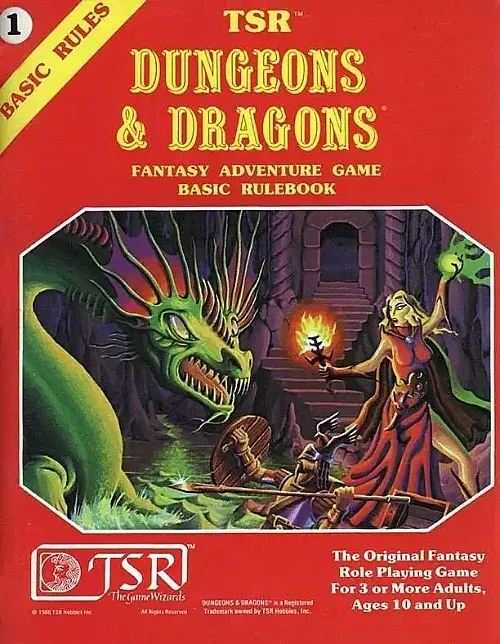
Back in 1981, Tom Moldvay wrote something in the foreword to the D&D Basic Rulebook that has stayed with me ever since:
"In a sense, the D&D game has no rules, only rule suggestions."
As teenagers, we certainly didn't play strictly by the rules as written (RAW). We improvised, made rulings, and invented mechanics when the circumstances called for them.
We didn't realize we were embracing what would later become commonly described as Rulings Over Rules, or occasionally the Rule of Cool.
I was also an avid wargamer, playing Avalon Hill classics like Panzer Leader and Squad Leader, along with countless games of Axis & Allies.
I love both wargames and roleplaying games, but they scratch different itches.
Wargames challenge my tactical and strategic thinking within a relatively defined set of rules, often against an opponent. Roleplaying games offer something different: the freedom to attempt almost anything imaginable within a shared fictional world.
And while roleplaying games certainly inherited much of their DNA from wargames, I've always felt that their greatest strength is the freedom to move beyond the mechanics.
Verisimilitude
One of the guiding principles behind my approach to running games is verisimilitude, maintaining a believable and internally consistent fictional world.
I don't mean realism in the literal sense. We're playing games with dragons, magic, and undead creatures, after all. I mean that the world should respond to the characters' actions in ways that make sense within the fiction.
To accomplish this, I use what I call the Three Ds of Play:
Declare. The player declares what their character is attempting to do. They can be as detailed or succinct as they wish. The important thing is to describe the action in the fiction rather than simply invoke a game mechanic.
Determine. The GM determines what happens, whether a roll is necessary, and what the circumstances might mean for the outcome.
Describe. The GM describes the result, incorporating the consequences into the ongoing scene.
This approach works with almost any tabletop roleplaying game.
It also makes introducing new players much easier. They don't need to understand dozens of rules or memorize a character sheet before participating.
They simply tell me what their character wants to do.
The mechanics come into play when they're needed.
Character Creation: Let Fate Decide
When I started playing D&D, we rolled 3d6 down the line for our ability scores. That was it.
Occasionally, if someone rolled a truly miserable character, we'd let them start again.
Over time, I adopted a simple modification:
Roll 3d6 down the line, then swap any two ability scores.
I think this was one of the very first house rules we came up with as teenagers back in the 1980s, after becoming frustrated with crappy rolls or wanting to play a particular class.
I know this runs contrary to modern character creation methods such as 4d6 drop the lowest, point buy, or standard arrays. But I enjoy letting fate play a part in determining who a character becomes.
It's certainly not for everyone, especially those who enjoy building or min-maxing characters. But give it a try—you might enjoy letting the fate of the dice determine who your character becomes.
A character with low Strength, poor Wisdom, or limited Charisma isn't necessarily a bad character. Sometimes those weaknesses create the most interesting personalities and situations.
Character Flaws
To encourage players to embrace those imperfections, I also use an optional Flaw rule.
A character with a negative ability modifier may choose a corresponding personality flaw from a table of suggestions.
Perhaps they're cowardly, gullible, overconfident, awkward, or superstitious.
The player decides how much they want to portray that flaw.
When the flaw meaningfully complicates a situation, another character who steps forward to help may receive Advantage on an appropriate check.
I've found this creates some wonderful opportunities for roleplaying. It encourages empathy, cooperation, and teamwork.
Sometimes a character's weakness becomes an opportunity for another character to shine.
Leveling Up Through the Adventure
Another thing I've always found a little strange is how characters suddenly gain new abilities and spells when they level up.
A fighter suddenly knows a new combat technique. A wizard gains access to more powerful magic. A cleric acquires a new divine ability.
Mechanically, that's perfectly fine. But I prefer to weave those advancements into the adventure.
When a player levels up, they tell me which spells or class features they're gaining. I then look for an opportunity to introduce those abilities naturally through the fiction.
A cleric might receive divine inspiration while praying after a long rest. A fighter could encounter a veteran warrior who demonstrates a new technique. A warlock might perform a secret ritual and receive a gift from their patron.
It doesn't always happen immediately.
The goal isn't to make advancement difficult, but to make it part of the character's experience rather than something that happens entirely outside the story.
I recently learned that Brennan Lee Mulligan uses a similar approach to character advancement. One thing I particularly admire about how Mulligan and Matt Mercer run their games is how they weave mechanics into the fiction.

Their attention to verisimilitude is, I believe, part of the secret sauce that makes their adventures come alive.
Less Math, More Adventure
Several of my house rules are designed specifically to make running encounters easier.
For example, rather than tracking every hit point for every creature, I often count meaningful hits.
A creature's Challenge Rating provides a useful baseline. A CR 5 gladiator might take five hits to defeat, while a CR 5 hill giant might take eight.
I adjust according to the context.
Likewise, when balancing encounters, I pay more attention to action economy than hit points.
A powerful boss with only two actions against five adventurers can be overwhelmed rather quickly. Adding a few one-hit minions can create a more engaging encounter than simply giving the boss another hundred hit points.
These are GM-facing shortcuts. The players continue rolling attacks and damage normally.
When a creature is badly wounded, I describe it through the fiction. Perhaps it's limping, bleeding, struggling to raise its weapon, or looking for an opportunity to retreat.
The players don't need to know how many hit points remain.
They need to understand what is happening in the scene.
Giving Players More Choices
Other house rules provide players with opportunities to take risks or make sacrifices.
Pushing a Roll allows a player to reroll a failed or disappointing d20 or damage roll at the cost of gaining one level of exhaustion.
Sacrificing Armor or Shields allows a character to absorb an otherwise devastating blow by destroying their shield or damaging their armor.
This also gives practical value to character backgrounds. A former blacksmith or leatherworker can repair damaged equipment during a rest, making those skills useful beyond character creation.
I've also modified exhaustion into a simple cumulative penalty, introduced escalating Constitution checks for dying characters, and replaced spell slots with a more straightforward Mana system.
Making Rest and Recovery Meaningful
I've also modified short and long rests to make recovery more meaningful.
During a short rest, a wounded character benefits from another character tending to their injuries, either using a Healer's Kit or making a Medicine check. Without assistance, recovery is much slower.
It's another small change that encourages teamwork while giving practical skills and equipment a greater role in the adventure.
None of these rules removes consequences.
Quite the opposite.
They give players more control over their decisions while making the consequences of those decisions matter.
House Rules for Gothic Horror
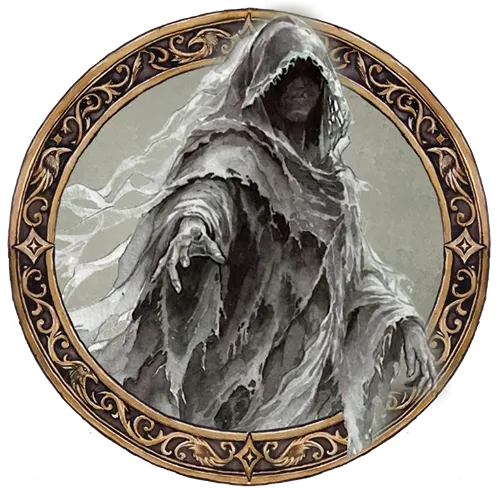
When running Curse of Strahd, I've also developed several optional rules specifically to reinforce the gothic horror of Barovia.
These include Fear, Horror, Despair, and Nightmares, each representing a different way the horrors of Barovia can affect a character.
Fear is the immediate threat of danger. Horror is the shock of witnessing something terrible. Despair is the gradual loss of hope. Nightmares follow characters into their sleep.
I also introduced an alternative to conventional resurrection: Revenant Characters.
In Barovia, the souls of the dead are trapped by the Mists. When a character dies, their soul may return in another corpse, driven by vengeance or an unfinished quest.
They retain their memories and abilities, but their former life is gone.
Animals fear them. Villagers recoil from them. Their companions may not even recognize them.
It creates some fascinating roleplaying opportunities while reinforcing the themes of the setting.
These rules aren't intended for every campaign. They're examples of how I adapt mechanics to support the atmosphere and fiction of a particular adventure.
Revisiting the 2014 Dungeon Master's Guide
While I think the 2024 Dungeon Master's Guide is certainly better organized than the 2014 edition, I was disappointed that several optional rules didn't make the transition.
I particularly enjoyed the additional combat options, such as Disarm, Overrun, Tumble, and Climb Onto a Bigger Creature, as well as the Background Proficiency variant.
I've included references to some of these older options in my free PDF. They also helped inspire several of my own house rules.
You can also watch my video comparing the two editions:
DMG 2014 (5e) vs DMG 2024 (5.5e)
Download My Free D&D House Rules
I've collected these house rules into a free PDF, including the mechanics, examples, and reference tables.
The collection covers character creation, flaws, leveling up, combat, dying, resting and recovery, exhaustion, Mana, and my optional gothic horror rules for Curse of Strahd.
These are some of the house rules I've collected over the years of playing D&D. Some have been with me since the early 1980s, while others are more recent additions.
Take what you like, change what you don't, and make the game your own.
After all, the rules are only suggestions.
What are some of your favorite D&D house rules? I'd love to hear what you've changed at your table.