
The Hold of the Sea Princes and the War That Shaped Southern Keoland
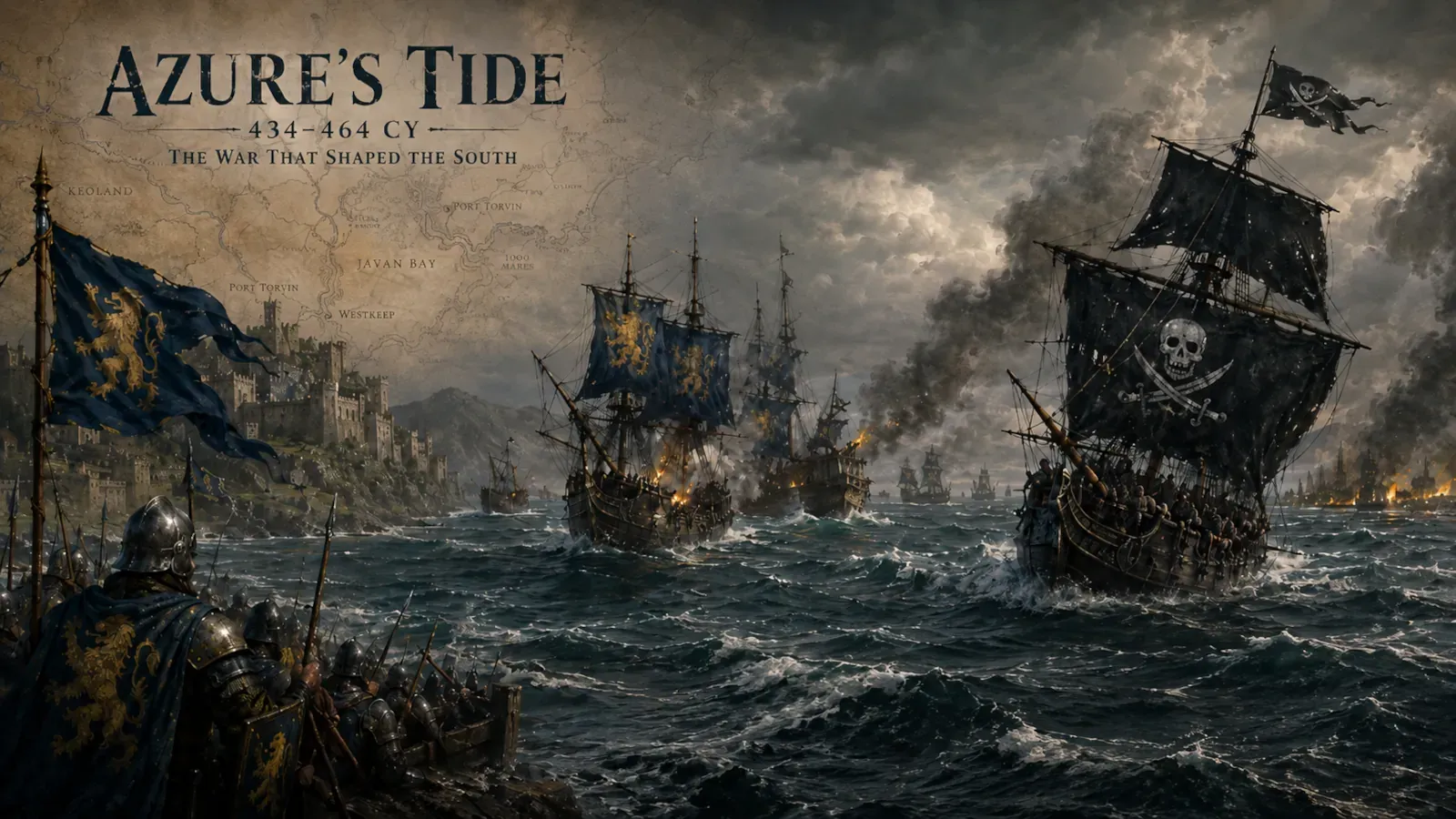
(title image, painting by Geoff Hunt)
One of the defining conflicts in Greyhawk’s history was the war now remembered as Azure’s Tide. Fought roughly a century before the current era of 576 CY, it reshaped the southern coast of Keoland, severed old trade routes, gave rise to the Hold of the Sea Princes, and left scars that still shape the politics of Saltmarsh and the surrounding region.
This conflict is referenced in older Greyhawk canon and in Ghosts of Saltmarsh (5e). It was not just a naval war between Keoland and pirates. Azure’s Tide changed the balance of power across the south. It weakened Keoland’s grip on its coastal holdings, disrupted trade along the Javan River, fortified the borderlands between the Dreadwood and the Hool Marshes, and allowed smuggling to flourish in Saltmarsh.
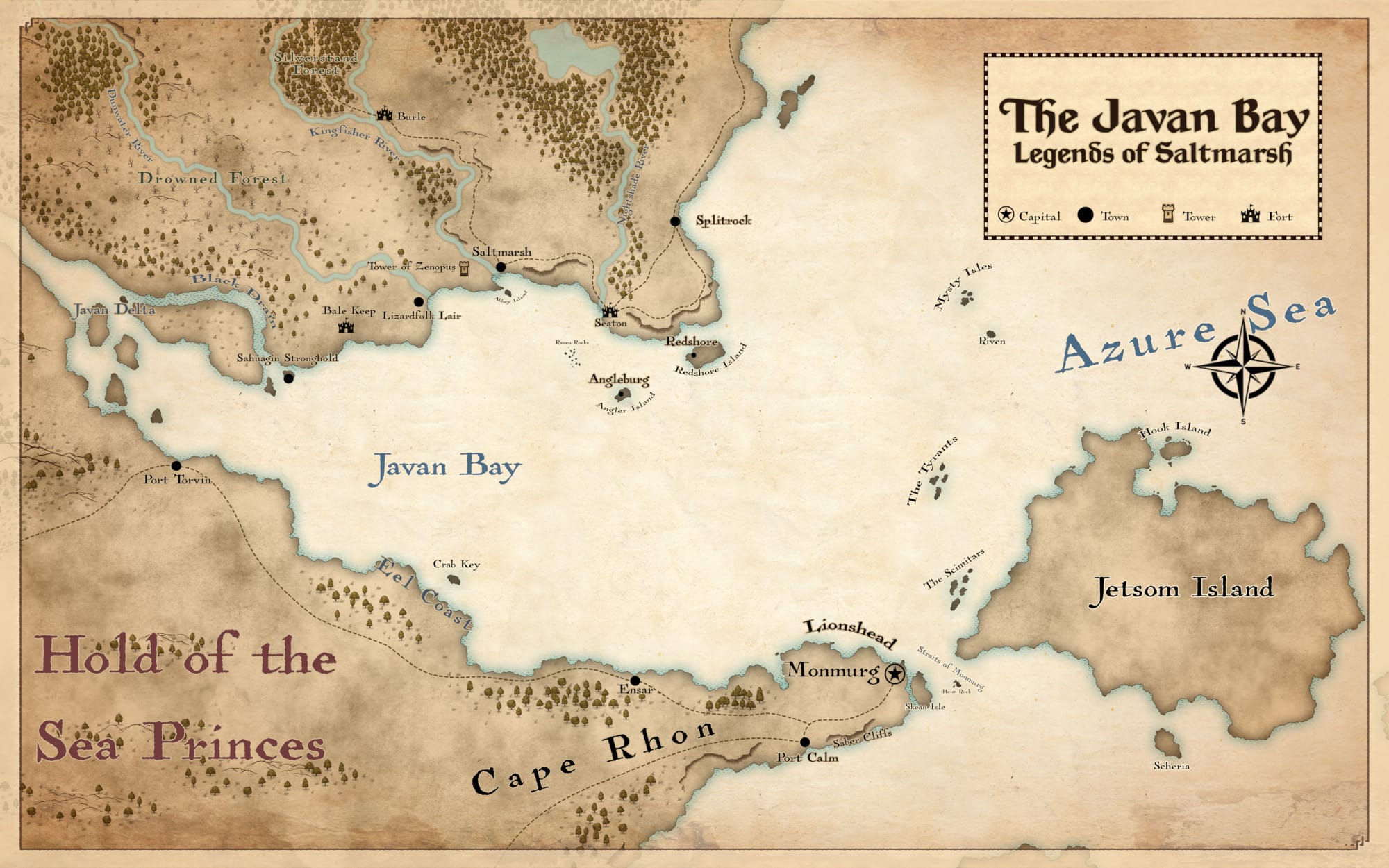
The war touched nearly every major location in the region: Saltmarsh, the military port of Seaton, the decaying river-port now known as the Styes, the contested lands near the Hool Marshes, and the frontier roads that link the interior to the Azure coast. It also explains the rise of defensive strongholds such as the Keep on the Borderlands and the ruined Bale Keep.
For adventurers, this history is more than background. Azure’s Tide created the conditions behind the smuggling trade in Saltmarsh, the influence of Gellan Primewater, the arms-running at the heart of The Sinister Secret of Saltmarsh, the problems in the Styes, the agenda and motives of the Scarlet Brotherhood, and the slave trade of the southern seas.
Azure’s Tide
434–464 CY
The conflict between the Kingdom of Keoland and the pirates who would become the Sea Princes lasted roughly three decades. Its final years were marked by naval battles, coastal raids, sieges, and the death of a king.
The war began when Keoland attempted to assert its authority over the Azure Sea and confront the growing pirate menace. It ended without a clear victor. Keoland failed to restore full control over its southern territories, while the pirate captains transformed themselves from raiders into rulers.
Out of this struggle emerged a new power: the Hold of the Sea Princes, a rogue nation carved from the broken edge of Keoland’s southern influence.
The Spark in the South
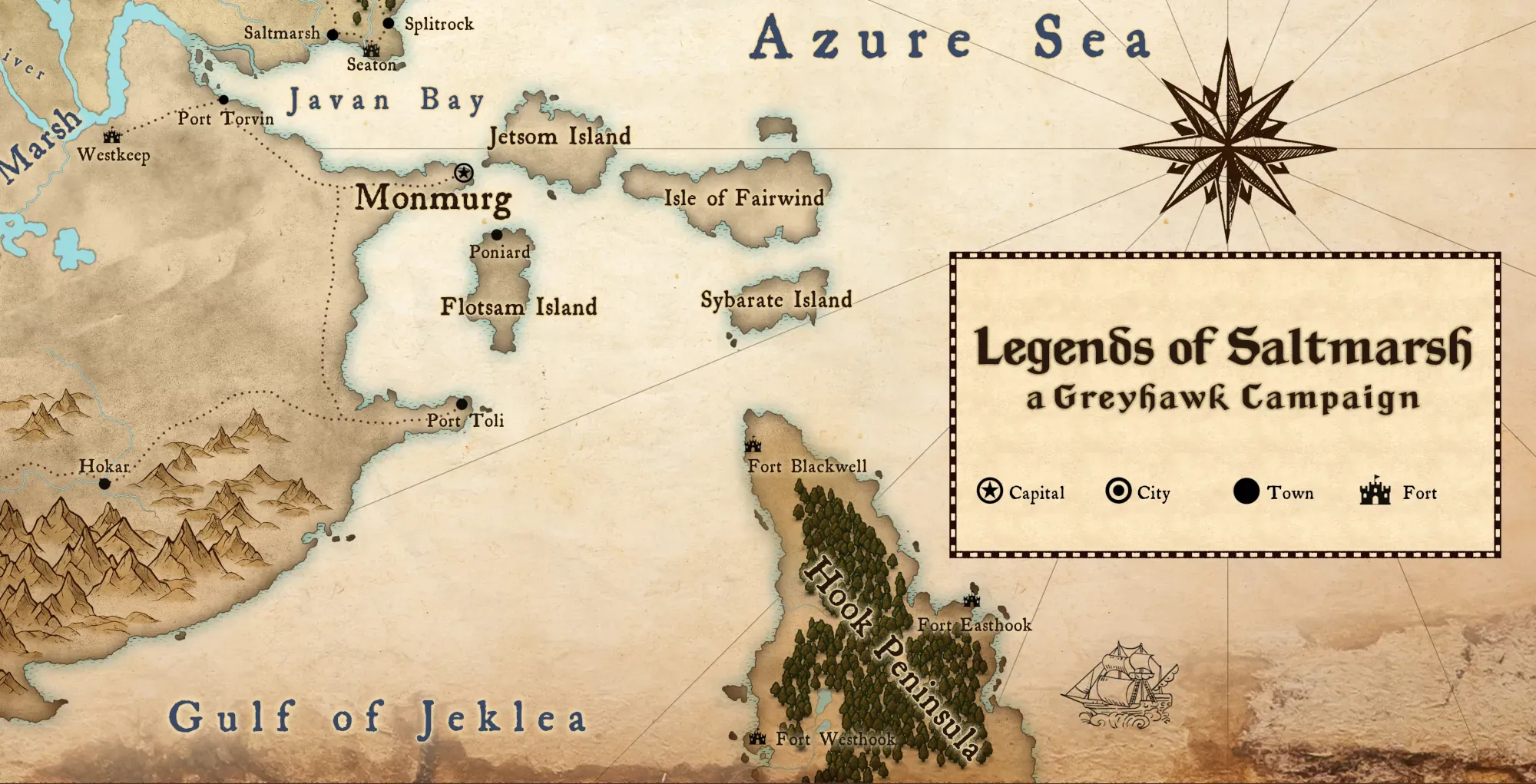
The first spark came in 433 CY, when pirate raids erupted across the Gulf of Jeklea. Around the same time, the brother of King Tavish III of Keoland vanished during an Amedio Jungle expedition somewhere around the Hook Peninsula.
Tavish III believed the pirates were responsible. In response, he dispatched a small flotilla to punish them and restore order.
The mission ended in disaster.
The Keoish ships were unprepared for the southern seas and the tactics of the pirate captains. The flotilla was defeated, and the pirates denied any involvement in the disappearance of the king’s brother. Whether they were guilty or not, Keoland had been humiliated, and the pirates had been emboldened.
By 434 CY, the raids had spread across the Straits of Monmurg, into Javan Bay, and along the waters of the Azure Sea. Merchant ships, isolated settlements, and coastal holdings all became targets. Keoland, distracted by its ambitions and political concerns in the north, failed to respond with decisive force.
For more than a decade, the pirates operated with little meaningful opposition. Their captains grew wealthier, their fleets better organized, and their ambitions greater.
The Rise of the Sea Princes
In 444 CY, a coalition of pirate captains united under a shared identity: the Sea Princes. Their name was inspired by the infamous pirate vessel known as the Sea Prince, whose reputation had already become legend across the Azure Sea.
This alliance changed the nature of the conflict. The captains were no longer independent raiders striking scattered targets. They had become a loose but effective confederation capable of coordinated attacks.
By 446 CY, the Sea Princes moved from piracy to occupation. They struck the mainland coast and seized key strongholds and ports, including Port Toli, Westkeep, and eventually Monmurg. These victories dealt a severe blow to Keoland’s authority in the south and transformed life in the coastal settlements that remained under Keoish control.
In places like Saltmarsh, trade with the south became more dangerous, but also more profitable. Smuggling and black markets flourished.
For Saltmarsh, it brought new business, new wealth, and a risky future.
The Collapse of River Trade
Before Azure’s Tide, the Javan River was one of the great commercial arteries of the south. Goods from the interior moved downriver through the lower Javan to Port Torvin, where barges, riverboats, and merchant vessels exchanged cargo bound for the Azure Sea.
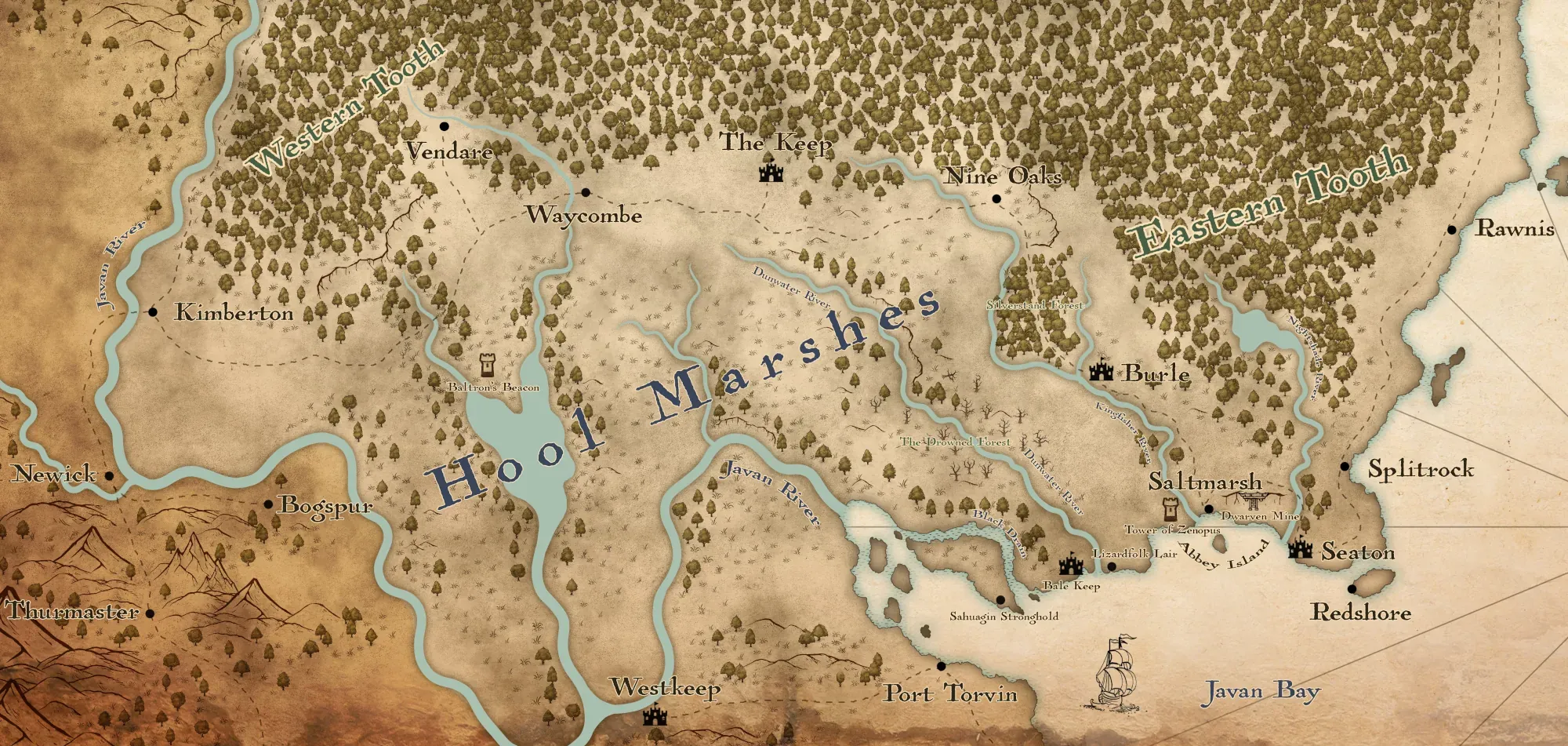
That changed when the Sea Princes gained control of the lower river and the Javan Delta. With Westkeep fallen and Port Torvin lost, river trade effectively died overnight. Kimberton remained Keoland’s last secure foothold on the Javan River, but the old river route to the sea was broken.
Merchants were forced back onto the overland road. Caravans now had to travel from Kimberton across the dangerous frontier between the Dreadwood and the Hool Marshes, eventually reaching Seaton and the coast. The return of overland trade revived the Old Road, but it also made that road a target. Bandits, smugglers, marsh raiders, monsters, and worse preyed upon the caravans.
The war had redirected the flow of trade and wealth.
The Keep on the Borderlands
The renewed importance of the Old Road led directly to the founding of the Keep on the Borderlands.
As river trade collapsed and caravans returned to the land route, Keoland needed a fortified position to secure the road between Kimberton and Seaton. The Borderlands, the dangerous stretch between the Dreadwood to the north and the Hool Marshes to the south, became too important to leave undefended.
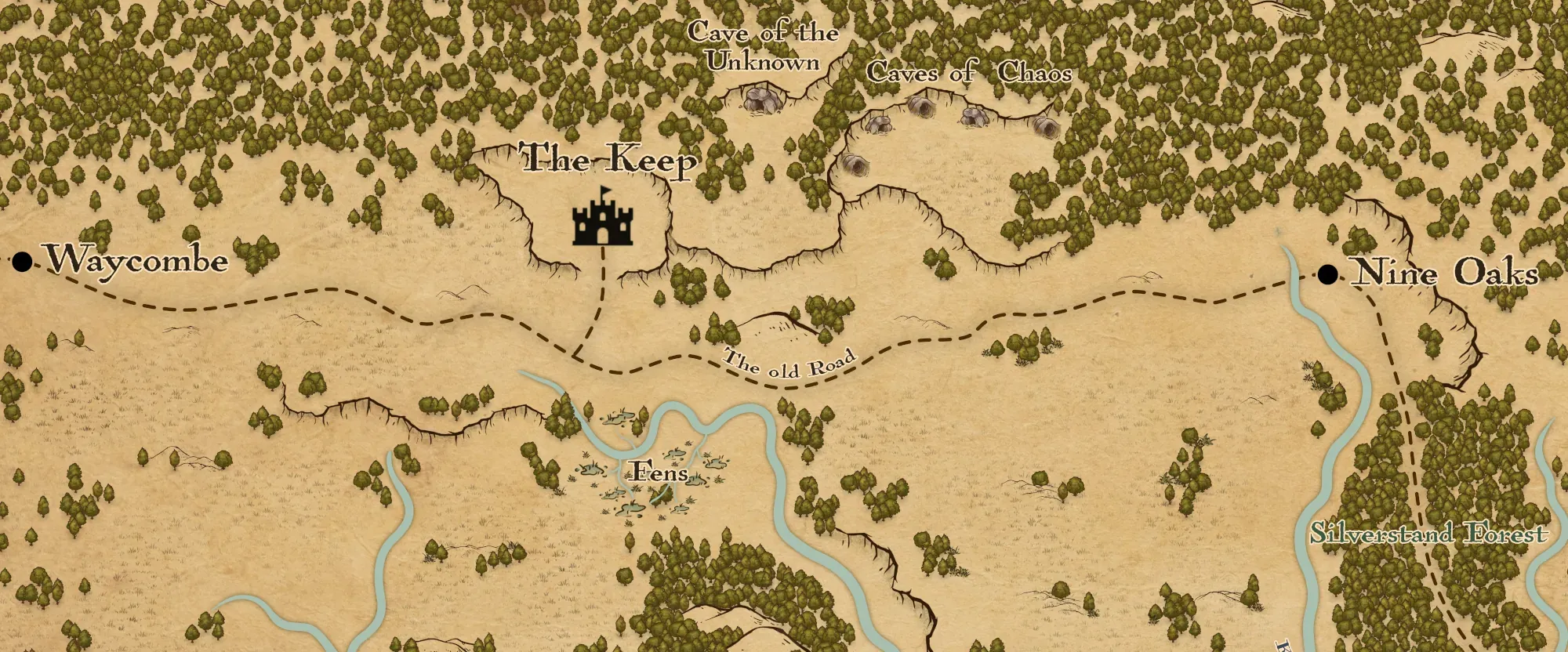
In 448 CY, the Crown ordered the construction of a fortified outpost halfway between Waycombe and Nine Oaks. It served as a military garrison, caravan stop, refuge, and defensive position against threats from both the woods and the marshes. By 452 CY, its curtain walls were complete, and over the following years it grew into the stronghold now known as the Keep on the Borderlands.
Tavish III Marches South
Eventually, King Tavish III could no longer ignore the crisis. Determined to reclaim the lost territories and crush the Sea Princes, he led a campaign into the south. His forces pushed through the dangerous, disease and monster infested Hool Marshes, aiming to retake the fortified position at Westkeep.
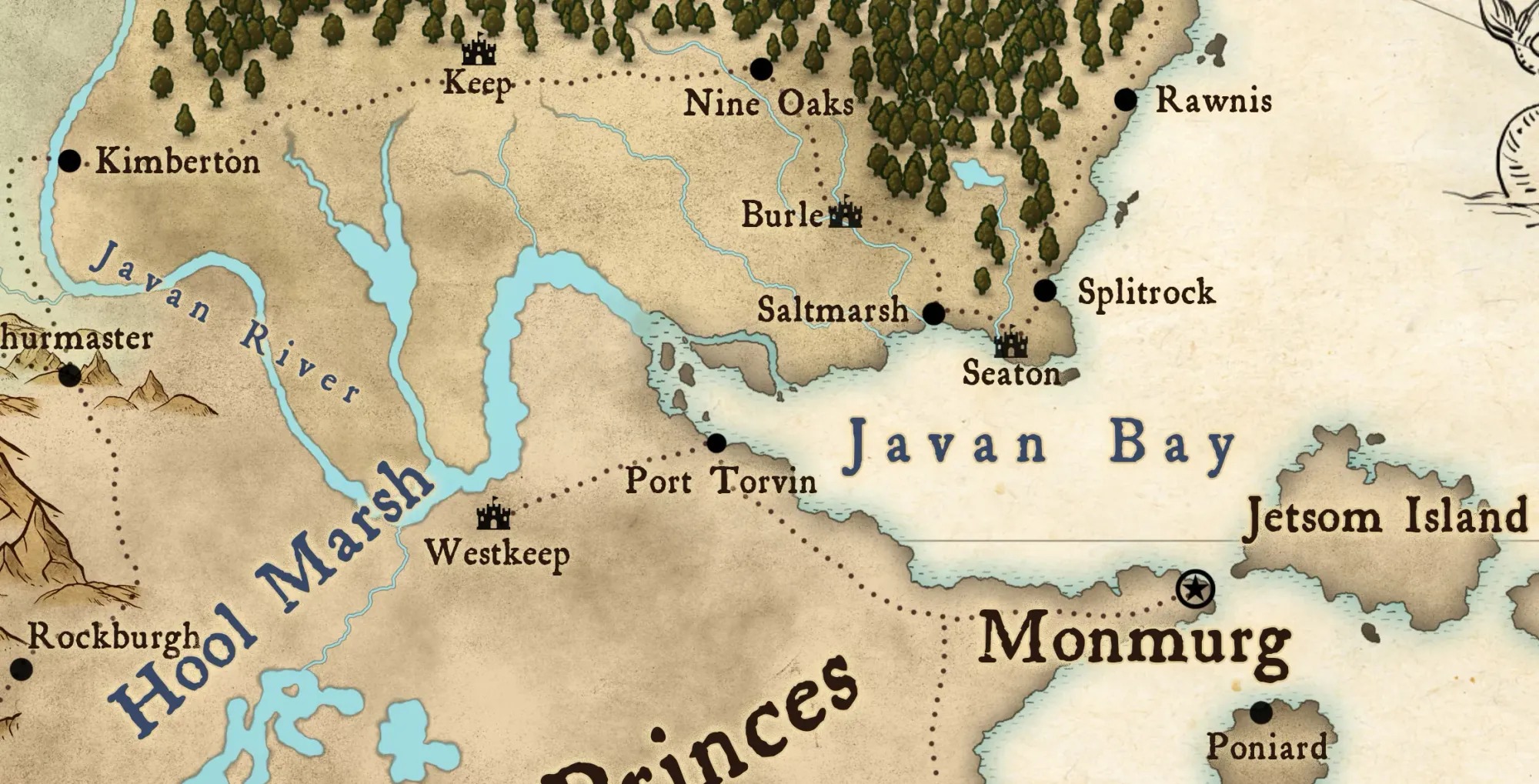
In 453 CY, the Keoish army laid siege to Westkeep.
The campaign proved disastrous. The terrain was brutal, the supply lines were stretched thin, and the marshes favored ambush, disease, and attrition. Keoland’s army struggled against an enemy that understood the land and sea better than they did.
The siege ended in defeat.
King Tavish III was killed.
His death shattered Keoland’s southern ambitions and marked one of the kingdom’s greatest humiliations. For the Sea Princes, it was a defining victory. Their power was no longer merely the result of piracy and opportunism. It had been tested against the king himself, and it had endured.
Bale Keep
In the wake of Tavish III’s death, Keoland looked for other ways to hold what remained of its southern frontier. If the kingdom could not easily retake Westkeep or the lower Javan, it could at least fortify the edge of the marsh and watch the waters of Javan Bay.
The answer was Bale Keep.
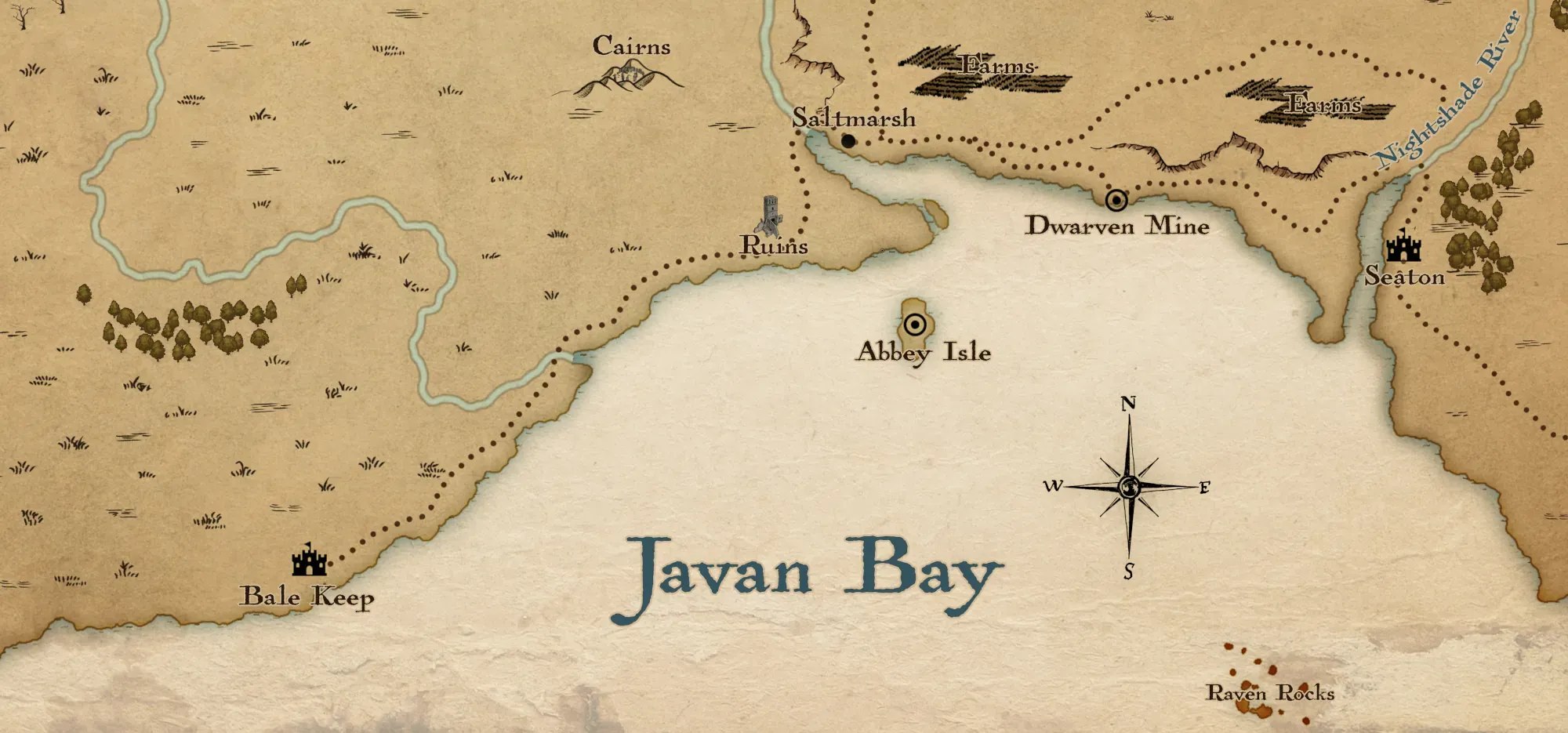
Built on a rocky rise above the coast, Bale Keep stood between the dangerous Hool Marshes and the pounding surf of Javan Bay. Construction began in 454 CY, a year after the disaster at Westkeep. With the coast too treacherous for supply ships, stone, timber, and provisions had to be hauled overland from Saltmarsh along a six-league trail through the swamp. Wagons sank, beasts vanished, workers fell to fever, and by the time the walls were raised in 457 CY, the marsh had claimed nearly twenty lives.
For a brief time, Bale Keep served as Keoland’s coastal fortification, guarding the western approaches of the Hool Marshes and watching the waters of Javan Bay. But its strength depended on a fragile supply line to Saltmarsh.
A few years later, the Sea Princes seized the Dunwater Delta, cutting the keep off from aid. The garrison endured six months of isolation, hunger, storms, and creatures from the Hool Marsh.
No one knows how the siege ended.
Some say the defenders starved. Others claim something from the Hool crept over the walls in the night. When Keoish scouts returned after the war’s end in 464 CY, they found only ruin and silence.
For more than a century, Bale Keep has stood abandoned, crumbling beneath wind and storms. Fishermen claim that on moonless nights, blue lights flicker along the parapets, and distant bells can be heard beneath the wind: the ghosts of soldiers still standing watch over a lost frontier.
Like the Keep on the Borderlands, Bale Keep was built to defend and protect the borders. Unlike the Keep, it did not survive and remains a scar of the war.
The Battle of Jetsom Island
The turning point of the wider conflict came in 464 CY at the Battle of Jetsom Island, where the Sea Princes’ flagship, the Sea Prince, sank with all hands.
Militarily, the battle was not a decisive victory. Keoland did not destroy the Sea Princes, and the Sea Princes did not conquer Keoland’s remaining southern holdings. The true stalemate was the land itself.
The Hool Marshes and Drowned Forest formed a brutal natural border, nearly impossible for either side to cross or control. Armies vanished in the mire, supply lines collapsed, and disease wiped out many. Yet the greatest terror came from the marsh itself: its lurking creatures, unseen predators, and nameless horrors that struck from fog, reeds, and black water. The Hool did not merely slow armies. It devoured them.
The loss of the Sea Prince carried enormous symbolic weight. For many older pirate captains, the age of open piracy was ending. Rather than continue a war neither side could win, they retired from raiding and settled on the mainland. In the lands south of the Hool Marshes, they consolidated their gains and became rulers, nobles, merchants, and slavers.
Thus, the Hold of the Sea Princes emerged.
The younger captains adapted. Some turned to exploration along the coast of the the Hook Peninsula. Others embraced a darker trade: slavery. Captives taken from the southern jungles became a lucrative commodity, enriching the Hold and cementing its reputation as one of the most ruthless powers of the Azure Sea.
The Slave Trade, the Pomarj, and the Slave Lords
The rise of the Hold of the Sea Princes connected the southern seas to a wider network of slaving powers. The Sea Princes looked south toward the Amedio Jungle and the Hook Peninsula, where captives could be taken and sold for profit. Farther east, other slaving routes flourished through the Wild Coast and the Pomarj, controlled by the infamous Slave Lords.
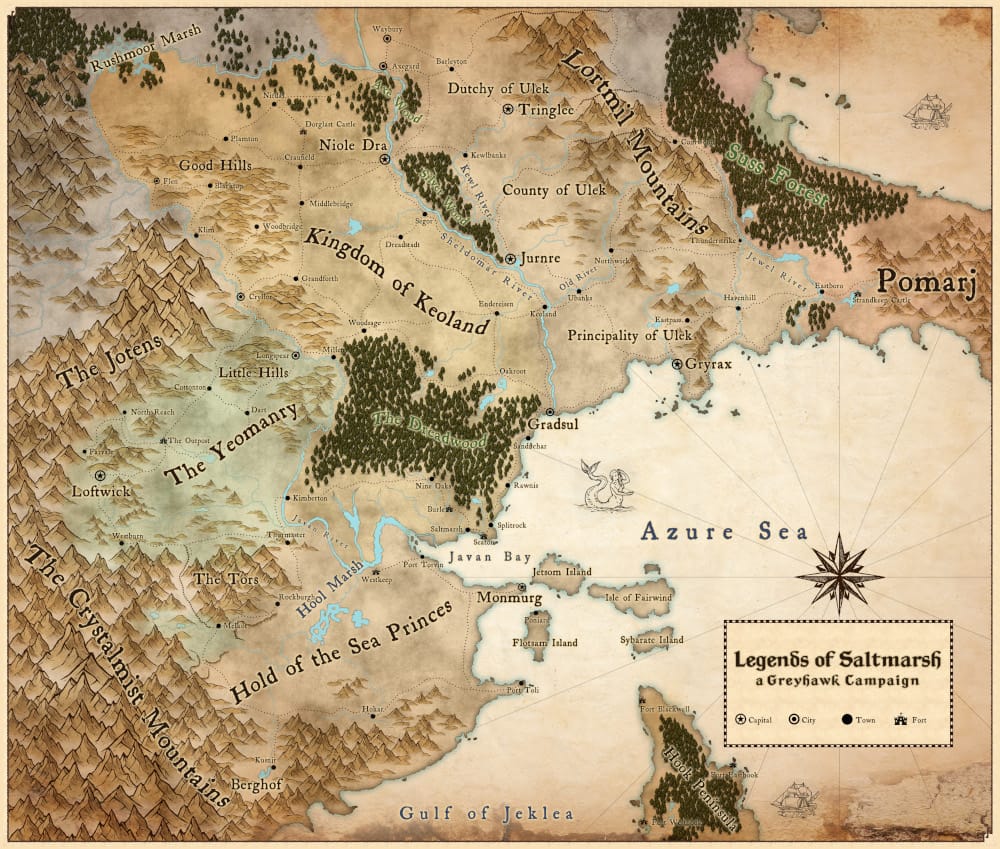
The Sea Princes may dominate the southern slave routes of the Azure Sea, it is believed that many of their captives eventually pass into the hands of the Slave Lords of the Pomarj. From there, they vanish into the markets of Highport and beyond.
For Saltmarsh, this makes the smuggling problem far more dangerous. Some contraband is merely untaxed brandy, silk, or weapons. But some ships may carry slaves and coin stamped from kingdoms far from Keoland.
From Port Torvin to the Styes
Before the war, Port Torvin was the great river-port of the lower Javan. It connected the inland trade of the Javan River to the Azure Sea, where river cargo became sea cargo and wealth flowed through its docks.
It had once been among the richest ports on the Azure Sea: a city of luxury, gambling, excess, and forbidden appetites, just beyond the comfortable reach of the Crown. In Port Torvin, it was said, anything could be bought or sold.
When the Sea Princes took control of the lower river, they saw Port Torvin as a grand prize. But under their rule, the city’s pleasures turned into something darker. No longer protected by Keoland, Port Torvin became a haven for pirates, smugglers, corrupt merchants, slavers, criminal syndicates, and darker forces. Trade did not vanish, it changed. Legitimate commerce withered, while black-market traffic, slavers, and illicit cargo became common.
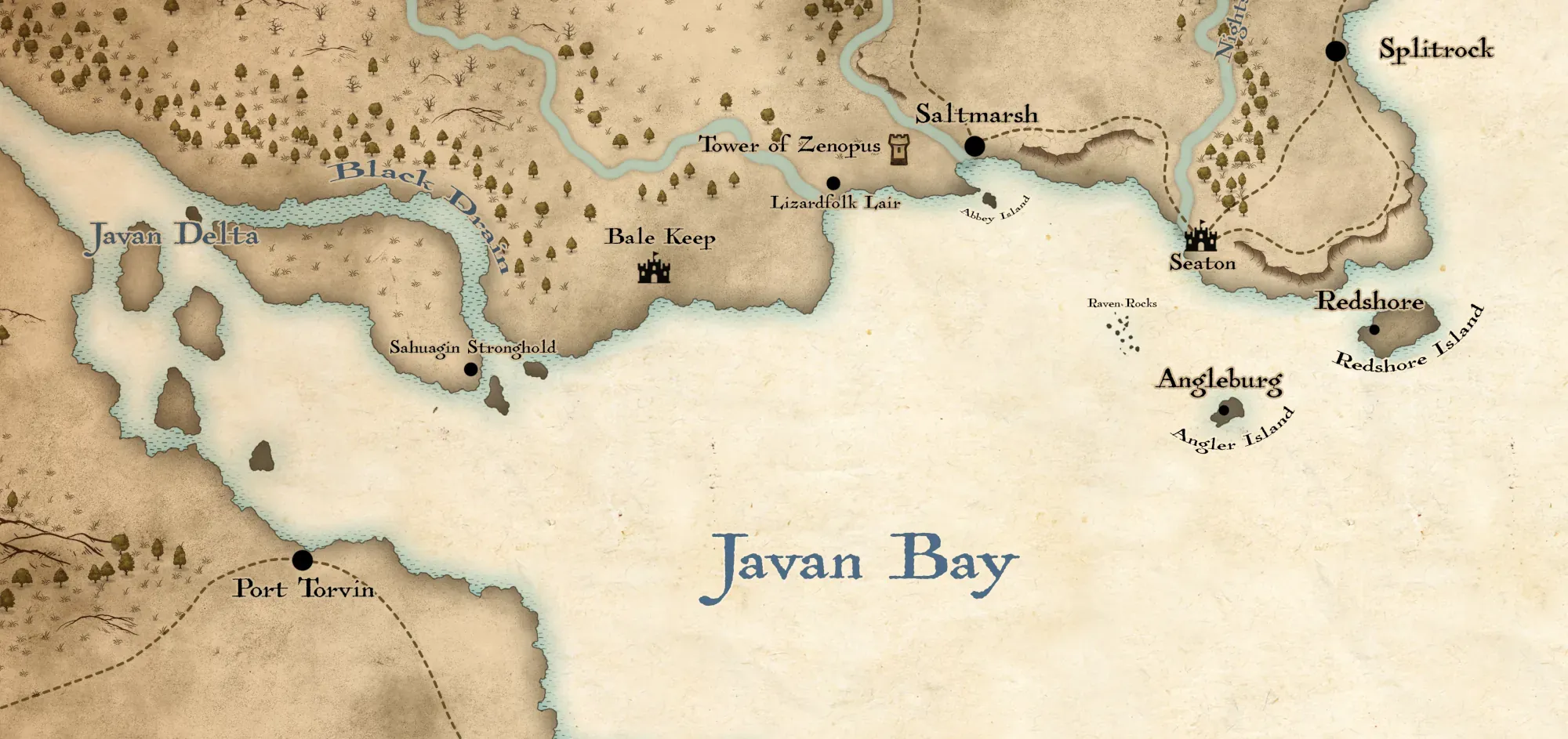
Over time, the proud name Port Torvin faded. Its docks broken. Its canals filled with refuse. Its warehouses became dens for smugglers and worse. The old river-port became a place of disease, poverty, and despair. A place that gave birth to darker forces.
By 576 CY, few outsiders still call it Port Torvin.
Most know it simply as the Styes.
A Century Later
By 576 CY, a century has passed since Azure’s Tide, but its scars remain across the region.
The relationship between Keoland and the Hold of the Sea Princes is still tense. Keoland remembers the loss of its southern territories and the death of Tavish III. The Sea Princes remember their rise from piracy to power and view Keoish authority with contempt.
In response, Duke Marik Feldren, governor of Keoland’s southern province, has strengthened the navy and established Seaton as a major military port. Seaton now stands as a symbol of Keoland’s determination to defend its coast agains the Sea Princes. Some fear that war may breakout again.
The situation remains fragile. The Scarlet Brotherhood watches from the shadows. It seeks to exploit the tension between Keoland and the Sea Princes, stirring unrest, encouraging division, and waiting for the right moment to turn old rivalries into open conflict.
Saltmarsh Between Two Powers
Caught between is Saltmarsh.
To Keoland, Saltmarsh is a coastal village of strategic importance, as the southern most village on the edge of the Hool Marsh. The Saltmarsh garrison is not just a lookout, but the last line of defense. To smugglers and merchants, it is a useful harbor, weaving lawful trade with smuggling.
To the Sea Princes, Saltmarsh is a place of opportunity.
To the Scarlet Brotherhood, it is a place of weakness.
The people of Saltmarsh understand this better than anyone. Fishermen, traders, smugglers, loyalists, traditionalists, and opportunists all share streets, taverns, and docks. The town survives on the edge of a wider conflict and tension.
The Legacy of Azure’s Tide
Azure’s Tide was not merely a war between a kingdom and a band of pirates. It broke Keoland’s southern reach and gave rise to a new power on the Azure Sea.
- It changed trade along the Javan River.
- It forced merchants back onto dangerous land routes.
- It led to the fortification of the Borderlands.
- It transformed Port Torvin into the Styes.
- It gave birth to smugglers, pirates, slavers, and privateers.
- It created the political conditions and tensions that define Saltmarsh a century later.
For adventurers, this history explains why weapons move secretly through coastal tunnels. It explains why old families have hidden loyalties. It explains why Seaton bristles with soldiers and ships. It explains why the Styes rots at the mouth of the Javan. It explains why Saltmarsh is more than a sleepy fishing village.
The war ended long ago, but its tide never fully receded.
Explore the Village of Saltmarsh
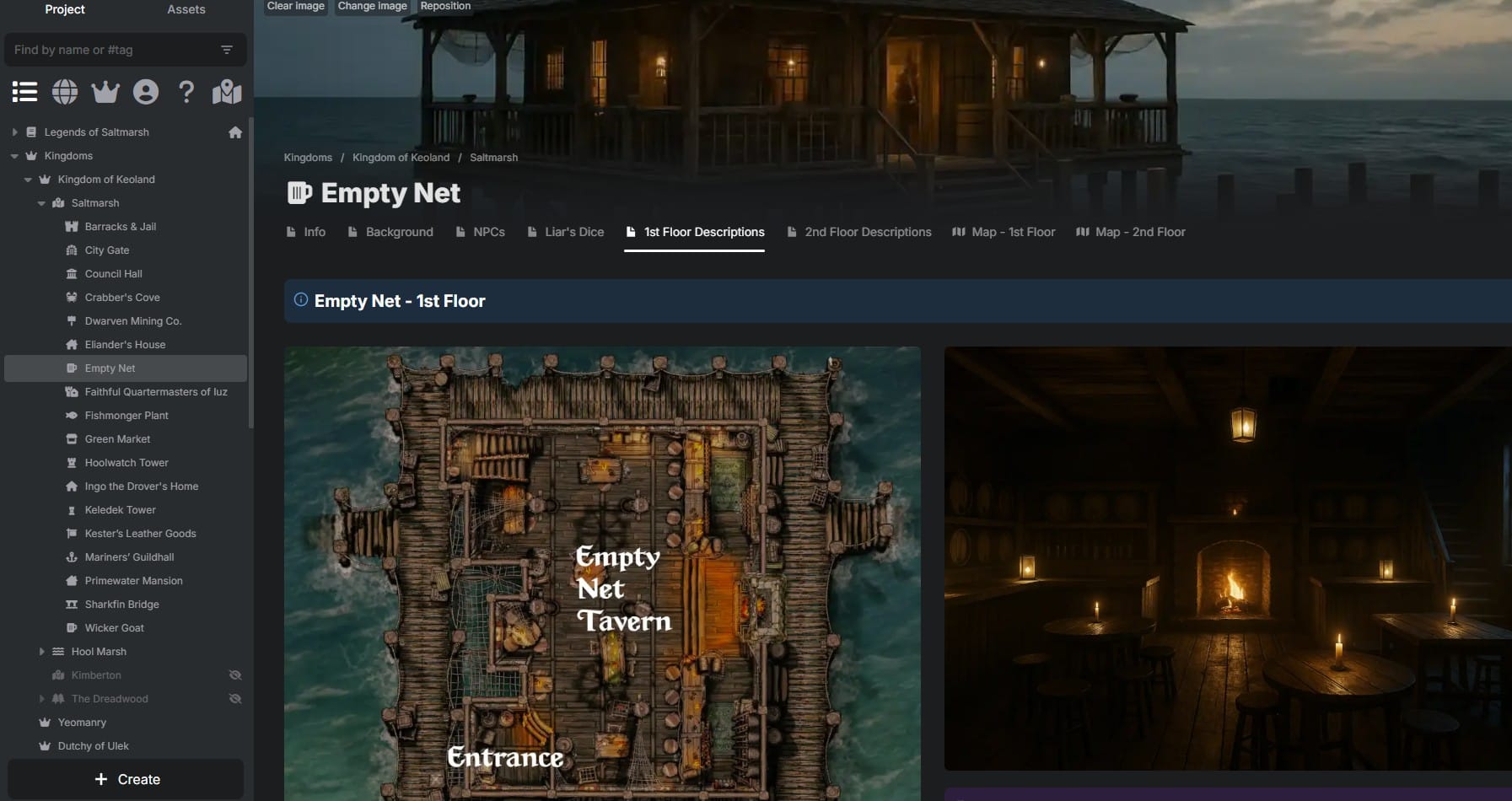
The Village of Saltmarsh and the surrounding region are being expanded online for free, including battle maps, regional history, new NPCs, adventure hooks, and additional material to help bring the sleepy coastal village to life.
Subscribe to the free newsletter to gain access to updates and new releases.
Check it out online: Legends of Saltmarsh
Further Greyhawk Reading
Membership helps support the continued development of Legends of Saltmarsh.
Members gain access to: digital assets, battle maps,
Foundry adventure modules, and more.
FREE Legends of Saltmarsh Map Packs
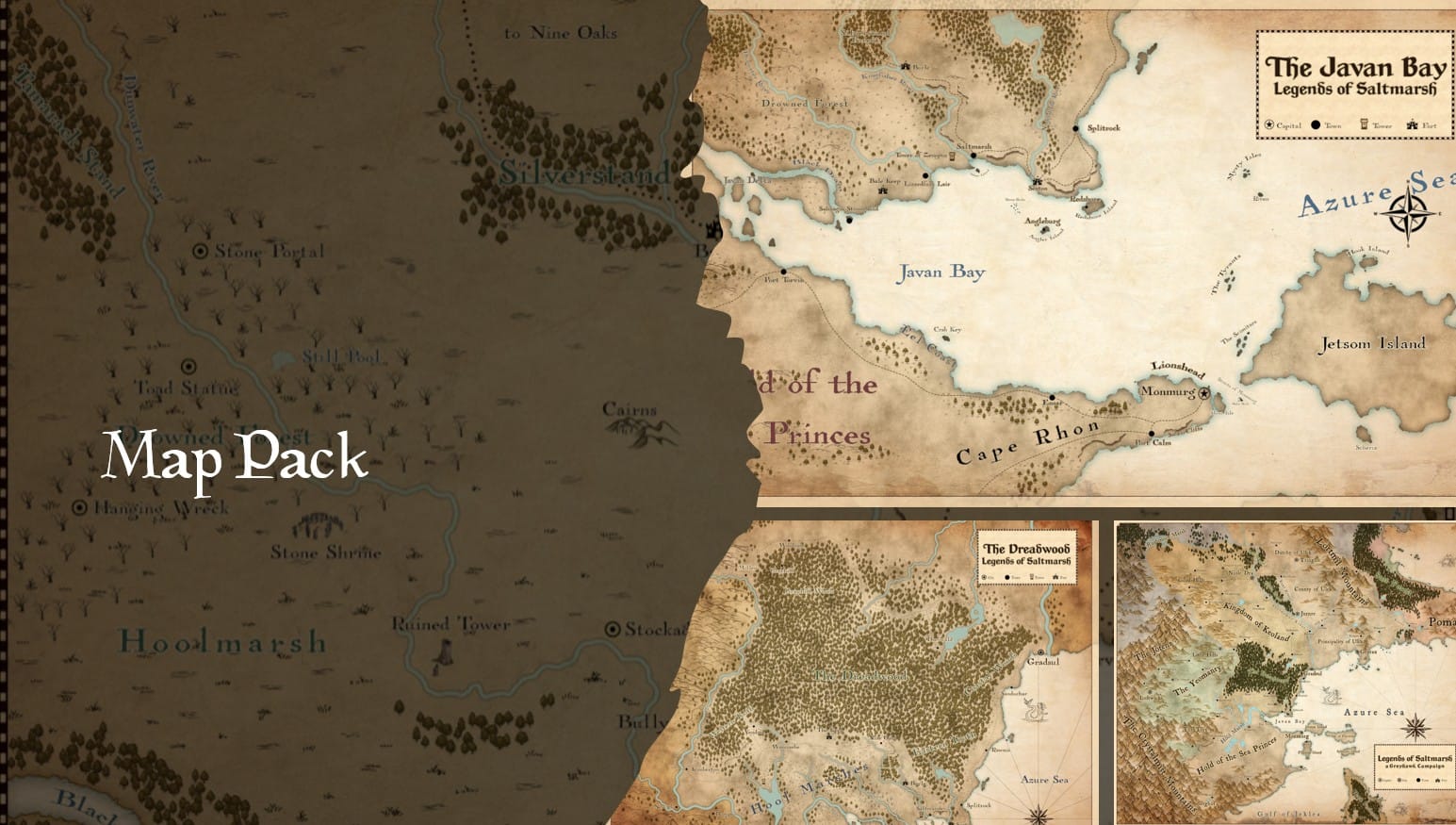
The maps used in this blog post are available for free as part of the Legends of Saltmarsh Map Pack.
The free 2K map pack includes:
- Sheldomar Valley regional map
- Dreadwood
- Javan Bay
- The Borderlands
- Saltmarsh Coast
Members also gain access to additional formats, including:
- 8K JPG maps for high-resolution use
- VTT-ready WEBP maps at 4000px width
- Printable PDFs at 300 dpi